Obedience Training
How to Teach a Puppy 'Leave It' and 'Drop It': A Two-Cue Safety Protocol
There are exactly two cues that have kept my own dogs alive on walks: leave it and drop it. One is a preventative — a cue that says 'don't pick that up' — and the other is a corrective — a cue that says 'give back what you already have.' They look similar to owners, but they solve completely different problems and are trained in completely different ways. Most training resources smear them together and leave puppies with a shaky version of both. Here is how to build each one cleanly, in the right order.

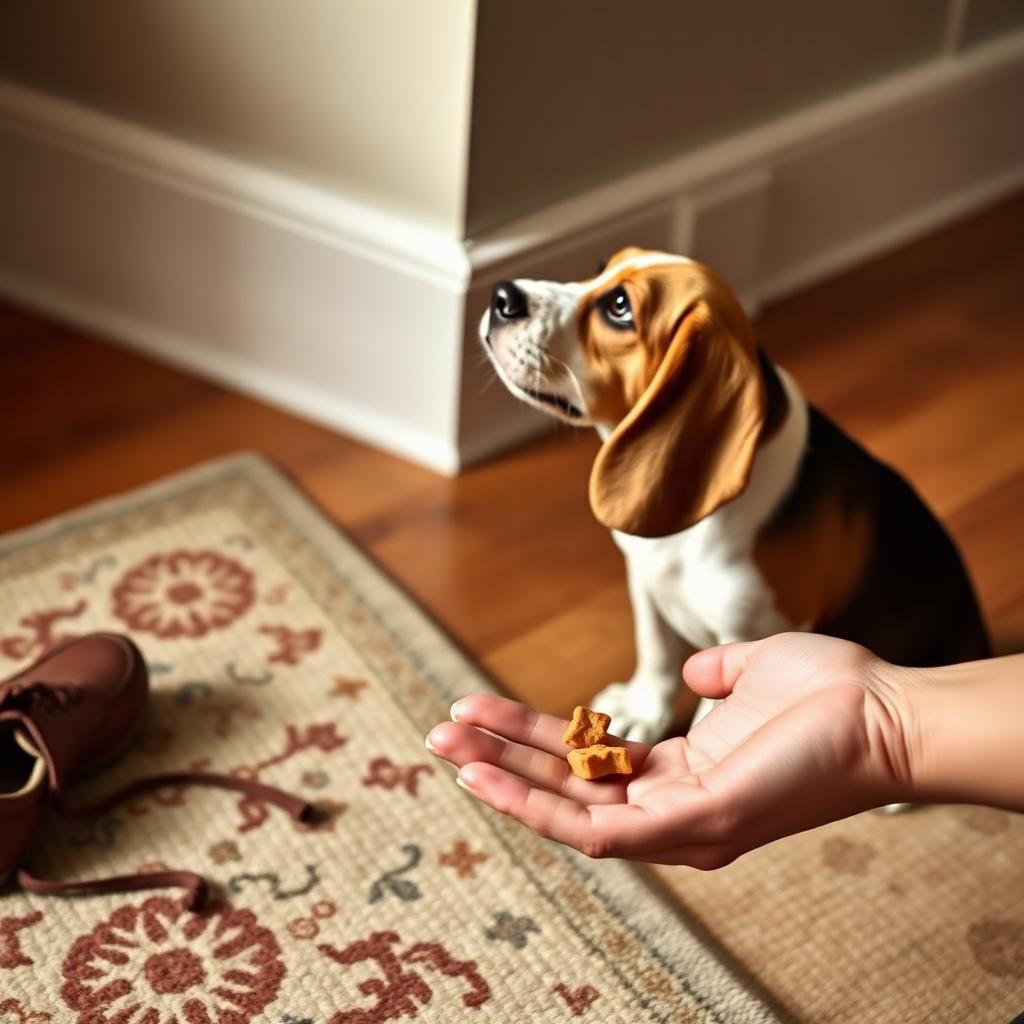
Leave it vs. drop it: the difference
Leave it is a 'don't touch that in the first place' cue. It applies to a mushroom on the sidewalk, a chicken bone on the curb, or the cat's food bowl. Drop it is a 'you already have it, give it back' cue. It applies to the sock the puppy grabbed and the crayon they lifted from the coffee table.
The distinction matters because the emotional stakes are different. When you use leave it, the puppy hasn't gained anything yet — it's easy for them to walk away. When you use drop it, they already have the reward in their mouth. The training must acknowledge that difference or the cue will collapse in real life.
Teaching leave it in four stages
Stage 1: The closed fist (2–3 days)
Place a treat in your closed fist at puppy height. The puppy will lick and paw. Say nothing. The moment they back off, mark and pay from your other hand. Repeat until the puppy is turning their head away from your fist within a second of seeing it. Only then add the verbal cue: say 'leave it' as you present the fist. Do 15–20 reps per session, 2 sessions a day.
Stage 2: The open palm (2–3 days)
Move to an open palm at floor level. If the puppy dives, close your hand. If they hold back, mark and pay from your other hand. This is where the puppy generalizes 'leave it' from a specific hand shape to a broader 'the food in front of me is off-limits.'
Stage 3: On the floor (3–5 days)
Place the treat on the floor with your foot ready to cover it if the puppy dives. Say 'leave it.' The instant the puppy turns away or looks at you, mark and pay from a jackpot in your other hand. The jackpot matters — the reward for leaving something must always exceed the value of what they left.
Stage 4: On walks (ongoing)
Salt the sidewalk in advance with cheerios or dry kibble. Walk your puppy past, cueing 'leave it' before they reach the food. Reward heavily from the other side. Repeat in five to ten locations over a month. This is the phase that turns a kitchen cue into a real-world safety net.
Teaching drop it: the trade-up game
Drop it is trained through trading, not through prying. Every 'take it away' interaction teaches a puppy to grab-and-run. Every 'trade for something better' interaction teaches them that giving up an object earns a bigger prize.
- Start with a low-value item the puppy is holding lightly (a boring rope toy).
- Present a high-value item near their nose — a chunk of cheese, a squeaky ball.
- The instant the puppy releases the first item, say 'drop' as the release happens (this is capturing, not commanding).
- Give the high-value item, then give the original item back too, if it's safe.
- Repeat 5–10 times per session across a week. Only then flip the order: cue 'drop' first, deliver the trade half a second later.
Giving the original item back is the counterintuitive step most owners skip — and skipping it is why so many puppies grow into adolescents who guard their toys. When drop always predicts loss, the puppy learns to hold tighter. When drop sometimes returns the toy, the puppy learns that letting go is safe.
Real-world scenarios you'll actually use these cues in
- Sidewalk chicken bone — 'leave it' as you shorten the leash.
- Puppy picks up your sock — 'drop' and trade for a treat.
- Approaching a stranger's dropped ice cream cone — 'leave it,' cross the street, jackpot.
- Puppy grabs the TV remote — 'drop,' trade for a stuffed Kong.
- Cat's litter box (if reachable) — 'leave it' plus better management.
- Dead squirrel on the trail — 'leave it,' u-turn, jackpot at 20 feet.
When drop it meets resource guarding
If your puppy stiffens, growls, or freezes when you approach an item, do not train drop it in that moment. That is resource guarding, and it needs a specific counter-conditioning protocol rather than a trade. Toss treats from a distance without approaching, and build a professional relationship with a certified trainer or veterinary behaviorist. Never physically take an item from a guarding puppy — that is how bites happen and how guarding worsens.
Mistakes that break both cues
- Using 'leave it' as a scolding word after the puppy has already grabbed the item. The word will lose its predictive meaning.
- Rewarding drop it with the same or a lower-value item. The trade must be a step up.
- Never giving the original item back. The puppy will start holding tighter.
- Practicing only in the kitchen. The cue must be generalized outside to survive real life.
- Chasing the puppy when they grab a sock. Chase is a game; you'll teach them to steal for fun.
Taught cleanly and reinforced with jackpots, leave it and drop it become the two cues you rely on daily without thinking. They're also two of the cues most likely to save your puppy's life. Build them early, refresh them often, and never let their reinforcement value slip.
Key takeaways
- Leave it is preventative; drop it is corrective. Two problems, two protocols.
- Always jackpot 'leave it' — the reward must exceed the item the puppy walked away from.
- Trade up on drop it and sometimes give the original item back. That's what prevents guarding.
- Generalize both cues outside the kitchen; that's where you'll actually need them.
- If growling appears, stop and get a certified trainer — that's resource guarding, not a training gap.
Frequently asked questions
- What's the difference between 'leave it' and 'drop it'?
- 'Leave it' is preventative — the puppy hasn't picked up the item yet. 'Drop it' is corrective — the puppy already has the item. They're trained differently and used in different moments.
- How long does it take to teach 'leave it'?
- Most puppies have a functional 'leave it' with a low-value item after 5–7 days of short daily sessions. Real-world reliability with high-value distractions like meat on the sidewalk takes 2–3 months.
- Should I say 'no' or 'leave it' when my puppy picks up something bad?
- Neither, once it's already in their mouth. Switch to 'drop' and trade for something better. 'No' after the fact teaches nothing.
- What if my puppy runs away with the item?
- Never chase. Kneel down, grab a jackpot treat, and make happy noises facing away from the puppy. Most will come to investigate. Then trade, and rethink your management (a dragging leash inside prevents this).
- Can I use the same word for both cues?
- You can, but you'll get sloppier behavior in both. Two distinct cues let the puppy respond precisely to two distinct situations.
Interactive tools
Use with this guide
Keep reading
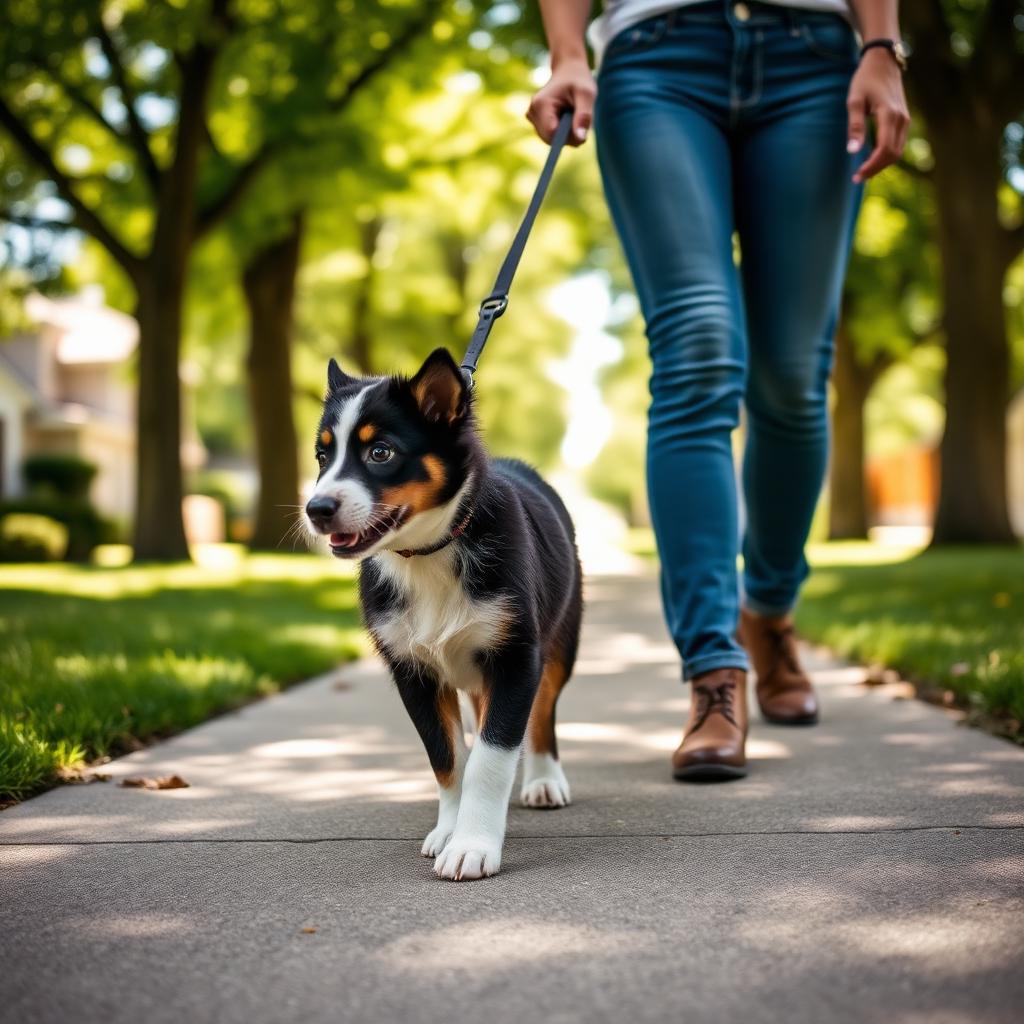
Obedience Training
Loose-Leash Walking for Puppies: How to Stop the Pulling Before It Starts
A force-free, mechanically simple way to teach a puppy to walk on a loose leash. Equipment, drills, and progression included.
9 min read
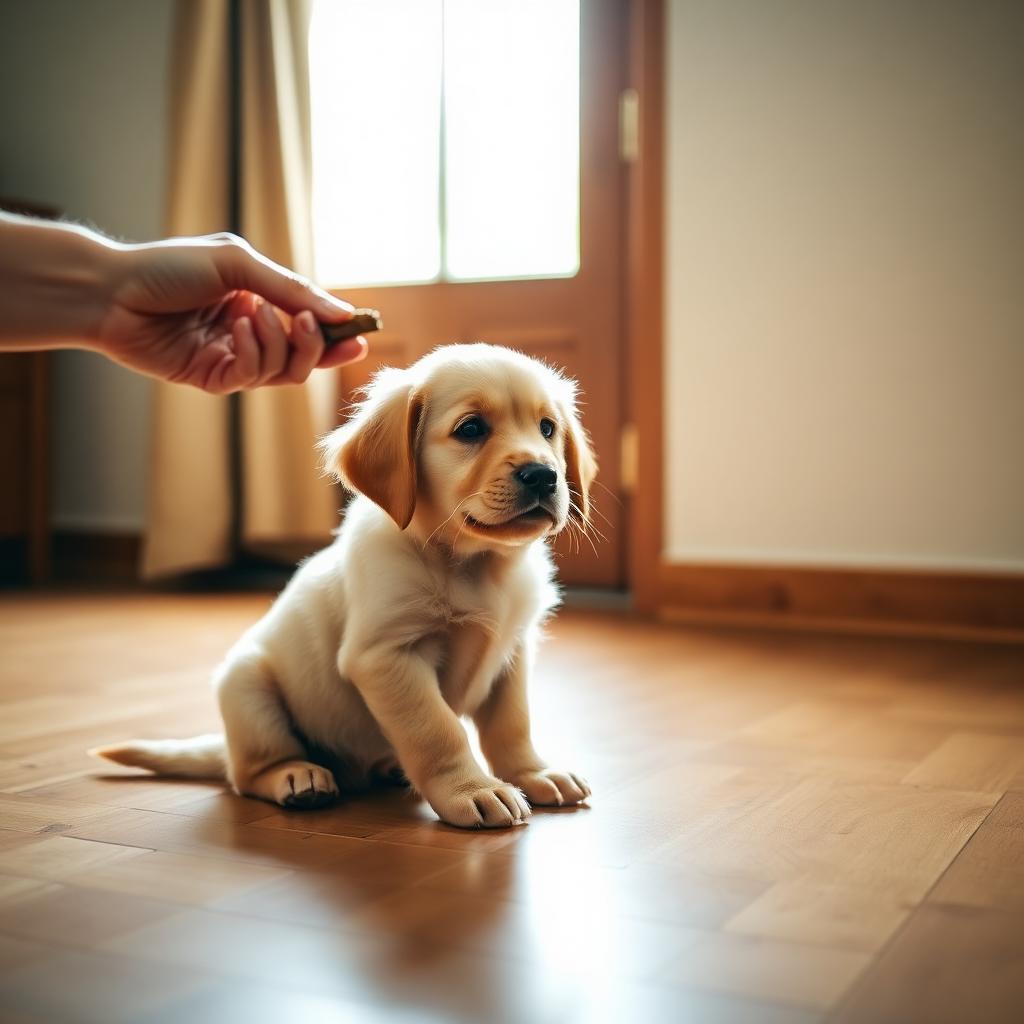
Obedience Training
How to Teach a Puppy Sit, Down, and Stay: The Complete Foundation Guide
A certified trainer's step-by-step protocol for teaching sit, down, and stay to a puppy — with luring, marker timing, duration ladders, and common mistakes.
14 min read
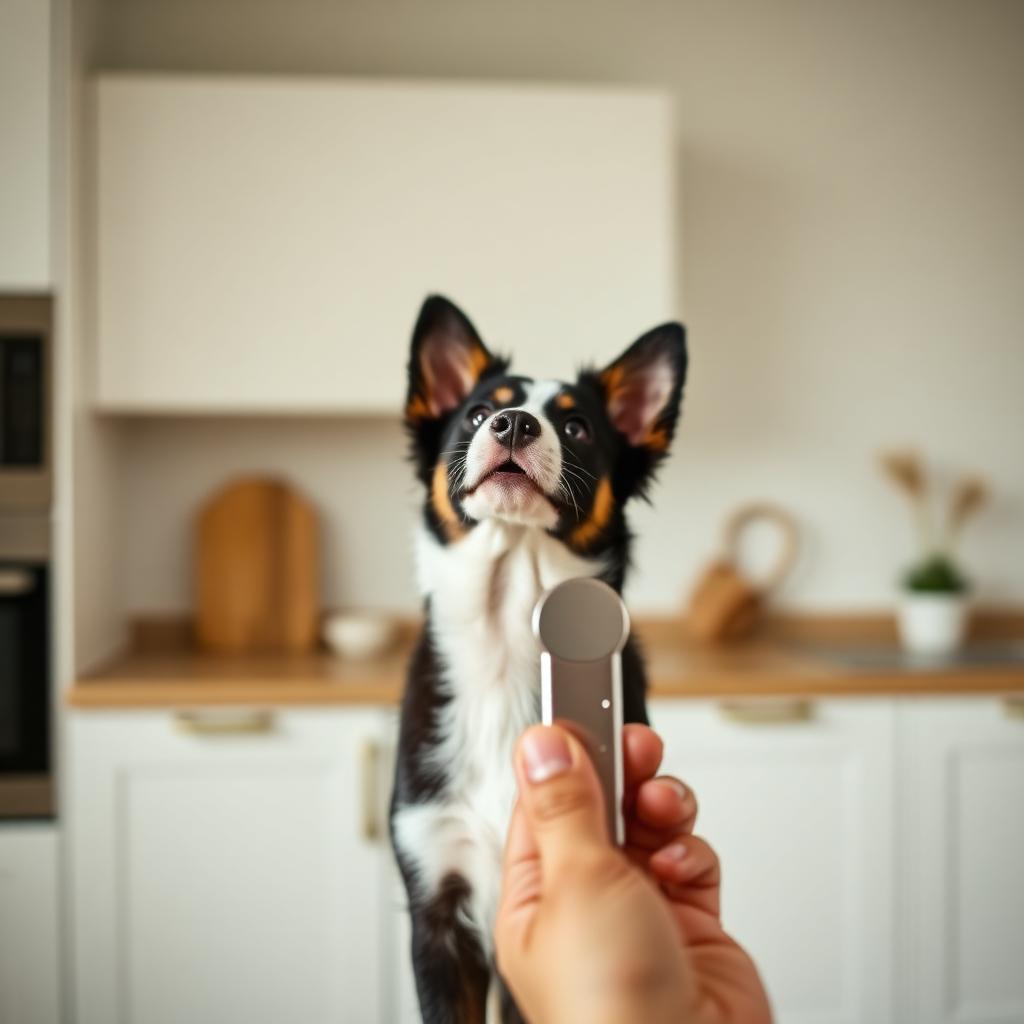
Obedience Training
Clicker Training vs. Verbal Marker: Which One Should You Use With Your Puppy?
A CPDT-KA trainer compares clicker training and verbal markers for puppies — timing, mechanics, pros and cons, and how to switch between them.
12 min read
Obedience Training
How to Stop a Puppy From Biting Hands: A Bite Inhibition Protocol That Actually Works
A certified trainer's evidence-based protocol for stopping puppy biting. Bite inhibition, redirection, arousal management, and what not to do.
13 min read

Obedience Training
Puppy Impulse Control Games: 8 Trainer-Approved Exercises for a Thinking Dog
Eight impulse-control games a certified trainer uses to teach puppies to pause, think, and choose calm — from Doggy Zen to the Premack pattern.
12 min read
Obedience Training
The Puppy Training Timeline: What to Teach at Every Age From 8 Weeks to 12 Months
A month-by-month puppy training timeline from a certified trainer — exactly which skills to prioritize at each developmental stage, and what to skip.
15 min read
Continue learning
Explore the full The Ultimate Puppy Training Guide
A complete, trainer-reviewed roadmap to puppy training from week 8 through 12 months — foundations, obedience, leash manners, and adolescence.