Obedience Training
How to Teach a Puppy Sit, Down, and Stay: The Complete Foundation Guide
Sit, down, and stay are the three cues every puppy owner rushes to teach — and, more often than not, teaches slightly wrong. The problem isn't the mechanics; it's the sequence. Owners tend to layer duration and distance before the puppy actually understands the position, then blame the puppy when the cue falls apart in the kitchen. In twelve years of coaching puppy classes, I've watched hundreds of families rebuild these three behaviors after a shaky first attempt. This guide walks through the exact ladder I use with private clients, from luring the very first sit to a rock-steady thirty-second stay next to an open front door.

Why the order matters
Sit is the natural starting cue not because it's cute, but because it's mechanically the easiest position to lure. A puppy tracking a treat above the nose almost always drops their rear end. Down follows because it uses the sit as its launch position. Stay is layered last because it isn't a body position at all — it's a duration modifier attached to whichever position the puppy is already in. Trying to teach stay before the puppy has a reliable sit is like teaching a child to spell before they can write letters. The order is not optional.
Before you start, gather pea-sized soft treats (about a third of your puppy's daily calories), a quiet room with minimal distractions, and a five-minute window when your puppy is fed, potty-broken, and calm. I recommend pairing these first sessions with the rhythm from our thirty-day puppy training schedule so cue work slots naturally into a nap-to-nap cycle.
Teaching sit: the lure-mark-pay loop
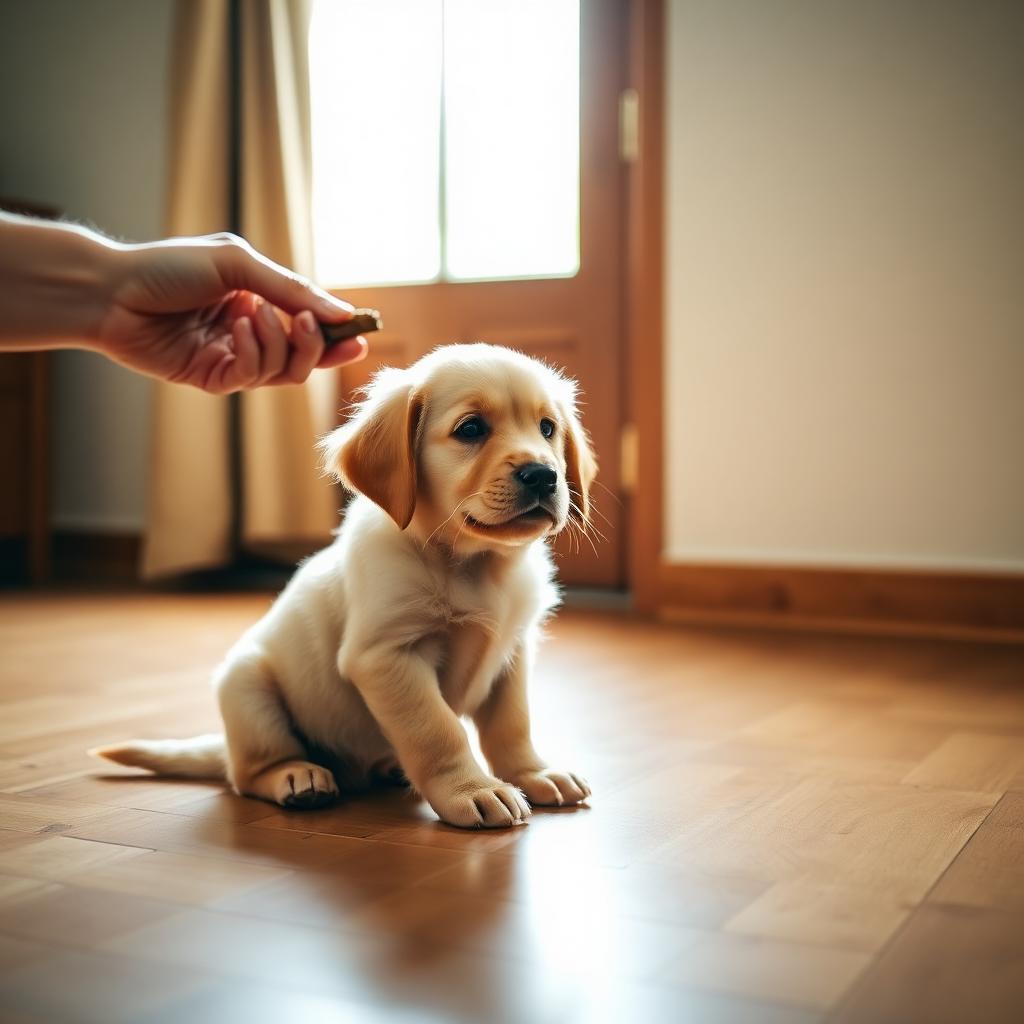
Hold a treat in a closed fist right at your puppy's nose. Slowly lift it up and slightly back over their head. As the puppy's nose follows the treat upward, their bottom will lower to the floor. The moment the rear touches down, mark the behavior with either a clicker or a crisp verbal marker ('yes'), then deliver the treat directly to their mouth at nose height so they don't have to jump up to reach it.
Repeat six to eight times in a row, then take a break. That is one session. Do three sessions a day for three days. Only after the puppy is offering the sit fluidly do you add the verbal cue: say 'sit' once as their rear starts to drop, then mark and pay. Say it once — never repeat. If the puppy doesn't respond, you've moved too fast; drop back a step, don't crank up the volume.
When to fade the lure
Around session ten, do the exact same hand motion but with an empty hand. Mark and pay from your other hand or a pouch. This is where most owners get stuck — they lure for weeks and end up with a puppy who only sits if food is visible. Fading the lure early is what turns 'trick' into 'cue.'
Teaching down: from sit to sphinx
Ask your puppy to sit. With a treat at their nose, slowly draw your hand straight down to the floor between their front paws, then a few inches forward along the ground — think of drawing a lowercase L. Most puppies will follow the treat into a sphinx-style down. The instant elbows touch, mark and pay on the floor between their paws (paying low is what keeps them lying down rather than popping back up).
Some puppies stall halfway and get frustrated. Break it into micro-approximations: reward the first head-dip, then the elbow bend, then the full down over three or four short sessions. Trying to hold out for the full down when the puppy has already tried three times is how sessions turn sour.
Teaching stay: the three D's, one at a time
Stay is built on three axes: duration, distance, and distraction. You raise one at a time, never two together. Start with duration only. Ask for a sit, count 'one Mississippi' in your head, mark, pay while the puppy is still sitting. Next rep, count to two. Then three. Then back down to one. This 'wave-shaped' progression is the single biggest predictor of a reliable stay — puppies need frequent easy wins mixed with the harder reps.
When your puppy can sit-stay for ten seconds at your feet, freeze duration and add distance: take one small step back, immediately step back in, mark, pay. Only after distance is solid at three feet do you start adding real distractions — a dropped toy, a family member walking through, then eventually a doorbell.
The duration and distance ladder
The most-asked question in my puppy classes is 'how long should my puppy be able to stay?' The honest answer is: it depends on age and practice, but the shape of the ladder is universal.
- 8–10 weeks: 2–3 second sit-stay at your feet.
- 10–12 weeks: 5–10 second sit-stay, one step away.
- 12–16 weeks: 15–20 seconds, three feet away, no distractions.
- 4–6 months: 30–45 seconds, across the room, mild distractions.
- 6–9 months: 1–2 minutes, with a family member walking through.
- 9–12 months: 3+ minutes, real-world distractions like the doorbell or dropped food.
Proofing: taking the cues on the road
A cue isn't learned; it's learned-in-a-context. Your puppy's flawless kitchen sit is not the same behavior as a sit on the sidewalk. Once each cue is fluent in one room, deliberately practice in three new locations at half the criteria. Living room? Cut duration in half. Backyard? Cut distance in half. This is the same principle we cover in more depth in the guide on teaching recall in distracting environments — new locations reset the clock.
Proof one variable at a time. Two variables at once is not proofing; it's ambushing your puppy.
Common mistakes that stall progress
- Repeating the cue ('sit, sit, SIT'). You are teaching your puppy to ignore the first three.
- Luring for months. Fade the food from the hand by session 10–12.
- Paying from above the head. Deliver treats at position height so the puppy doesn't pop up.
- Adding duration and distance at the same time. Raise one at a time, always.
- Ending on a failure. Always end a session with a rep the puppy can win.
- Practicing when the puppy is tired or hungry. Sessions after a nap and before a meal are gold.
These three cues will carry you through the first year of ownership if you build them carefully. From here, layer on impulse-control games, leave-it, and — once you're ready — off-leash recall. The training timeline by age will tell you exactly which cue to prioritize next.
Key takeaways
- Teach in order: sit, then down, then stay — the sequence is mechanical, not arbitrary.
- Fade the food lure by session ten to turn a trick into a real cue.
- Raise duration, distance, and distraction one axis at a time, never together.
- Say the cue once. Repetition teaches your puppy that the cue is optional.
- End every session on a repetition the puppy wins.
Frequently asked questions
- At what age can I teach a puppy to sit, down, and stay?
- As early as 8 weeks. Puppies can learn these three cues from the day you bring them home — sessions just need to be short (2–4 minutes) and paired with food they already love.
- Should I use a clicker to teach sit, down, and stay?
- A clicker helps because the sound is more consistent than a human voice, but a crisp verbal marker ('yes') works too. The marker matters less than your timing — it must occur within half a second of the correct behavior.
- How long until my puppy has a reliable stay?
- Expect 6–10 weeks of consistent, short daily practice to reach a 30-second stay across the room with mild distractions. Real-world reliability (doorbell, guests) usually solidifies around 6–9 months.
- Why does my puppy stand up as soon as I move?
- You raised distance before duration was solid. Drop distance back to zero, rebuild duration, then reintroduce a single small step at a time.
- Is it okay to push my puppy's rear down to teach sit?
- No. Physical manipulation slows learning and can create body-handling sensitivity. Lure with a treat over the nose — the puppy sits on their own because it's the most comfortable way to track the treat.
Interactive tools
Use with this guide
Keep reading

Puppy Basics
The Puppy Training Schedule: A Calm, Repeatable Plan for Your First 30 Days
A trainer-built, day-by-day puppy training schedule for the first month. Routines, potty timing, naps, socialization, and what to skip.
14 min read
Obedience Training
Teaching Recall That Works in Distracting Environments
Why your puppy's recall falls apart in the park, and the 5-stage trainer protocol that makes 'come' reliable around dogs, smells, and squirrels.
12 min read
Obedience Training
Clicker Training vs. Verbal Marker: Which One Should You Use With Your Puppy?
A CPDT-KA trainer compares clicker training and verbal markers for puppies — timing, mechanics, pros and cons, and how to switch between them.
12 min read

Obedience Training
Puppy Impulse Control Games: 8 Trainer-Approved Exercises for a Thinking Dog
Eight impulse-control games a certified trainer uses to teach puppies to pause, think, and choose calm — from Doggy Zen to the Premack pattern.
12 min read
Obedience Training
How to Teach a Puppy 'Leave It' and 'Drop It': A Two-Cue Safety Protocol
A CPDT-KA trainer's step-by-step protocol for teaching leave it and drop it — the two cues that keep a puppy safe from sidewalk hazards and chewed shoes.
12 min read
Obedience Training
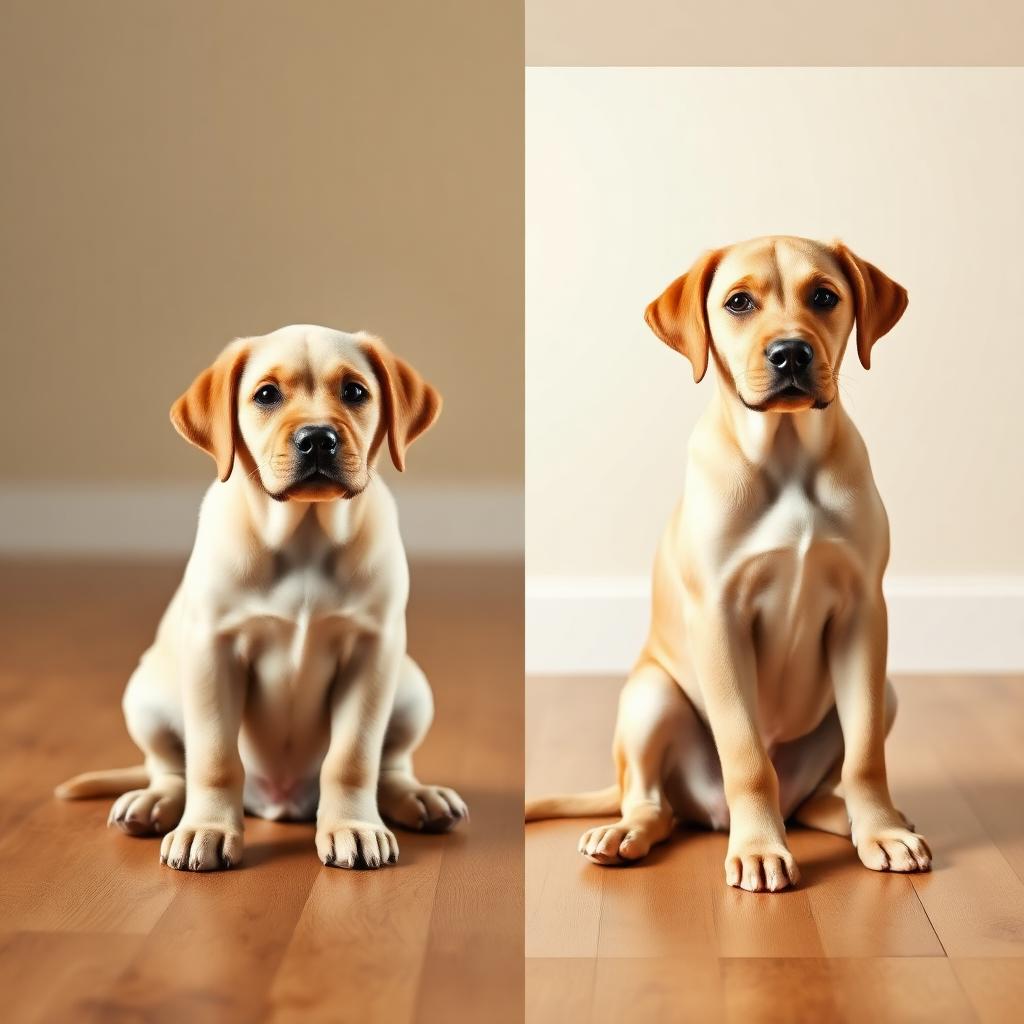
The Puppy Training Timeline: What to Teach at Every Age From 8 Weeks to 12 Months
A month-by-month puppy training timeline from a certified trainer — exactly which skills to prioritize at each developmental stage, and what to skip.
15 min read
Continue learning
Explore the full The Ultimate Puppy Training Guide
A complete, trainer-reviewed roadmap to puppy training from week 8 through 12 months — foundations, obedience, leash manners, and adolescence.