Obedience Training
The Puppy Training Timeline: What to Teach at Every Age From 8 Weeks to 12 Months
One of the most useful pieces of paper I hand new clients is a single page: a month-by-month checklist of which skills are age-appropriate, which are premature, and which will quietly go missing if you don't teach them during their sensitive window. Puppies don't train on a linear curve; they train in developmental bursts and dips. Miss the burst and you can still catch up — but the work is harder. This timeline maps the twelve months I've watched hundreds of puppies grow through, and shows you exactly where to spend your time each week.


How to use this timeline
This is a guide, not a race. Small breeds mature faster than large breeds; a nine-month-old Chihuahua may be behaving more like a fifteen-month-old Great Dane. Use the developmental windows (socialization, fear periods, adolescence) as the fixed anchors and adjust the timing of individual skills to your puppy. If you're already using our thirty-day training schedule, this timeline picks up where that leaves off and extends it through the first year.
Each stage lists the two or three skills that matter most in that stage. Focus on those. Everything else — cute tricks, advanced heelwork — can wait. Trying to teach eleven cues in month two is how owners burn out and puppies get confused.
8–10 weeks: arrival and foundation
- Name recognition: puppy turns head to their name (10 reps a day).
- Charging a marker: 'yes' or clicker paired with food.
- Potty schedule: outside every 60–90 minutes.
- Crate positive association: naps in a crate with a Kong.
- Handling: 30 seconds of paw, ear, and mouth touches, twice daily.
Do not: drill sit or down for more than three minutes at a stretch, correct nipping harshly, or bring the puppy to a busy dog park. This week is decompression, not obedience.
10–14 weeks: the golden socialization window
This is the single most important stretch of your puppy's first year. The critical socialization period, described in the WSAVA and AVSAB guidelines, closes around 14 weeks. Every positive exposure to a novel person, dog, surface, or sound during this window builds lifelong resilience. Every missed exposure is harder to add later.
- Sit and down under lure, with a marker.
- Recall to the name in low-distraction environments.
- 50 novel positive exposures (see our socialization checklist).
- Loose-leash foundations on a long line in the backyard.
- First puppy class (indoor, vaccinated peers).
14–16 weeks: fluency and the first fear period
Somewhere in this window, most puppies enter their first fear period — a two-to-three-week stretch when a novel scary experience can imprint for life. Keep exposures gentle and predictable. Now is not the week to take your puppy to a fireworks display or a chaotic children's birthday party.
- Fluency on sit, down, and hand target under mild distraction.
- Stay at your feet for 5–10 seconds.
- Continued short, positive exposures — quality over novelty.
- Beginning of leave it (stage 1 fist).
4–5 months: impulse control and teething
Adult teeth are erupting. Chewing intensity peaks. Meanwhile, your puppy's cognitive capacity has expanded and they can hold longer sessions (5–8 minutes). Load up on impulse-control games — this is the age when the habit sticks best.
- Doggy Zen and It's Your Choice mastered.
- Drop it via trade-up (see our leave it and drop it guide).
- Wait at the door: released only on cue.
- Recall in mildly distracting outdoor spaces on a long line.
- Place command foundations (mat magnet).
5–7 months: adolescence begins
Adolescence is when 'the good puppy' seems to unlearn everything. It's not defiance. Recent research on canine adolescence (Asher et al., 2020) has documented measurable dips in trainability during this stage, especially in the primary caregiver's presence. Expect regression. Do not add corrections; add reps.
- Refresh all fluent cues at half criteria in three new locations.
- Loose-leash walking on real streets, not just the backyard.
- Recall at growing distances with a long line.
- Structured off-switch: 30-minute settles on a mat with a chew.
7–9 months: proofing and the second fear period
A second, milder fear period often appears somewhere between 6 and 14 months. Watch for sudden avoidance of things your dog previously loved — a garbage bin on the corner, a friend in a hat. Don't force. Feed treats at a distance and let them approach on their own timeline.
- Stay for 30–60 seconds with distractions.
- Recall around low-level dog and human distractions.
- Polished leave it on walks with real hazards salted along the route.
- First off-leash sessions in enclosed spaces with excellent recall.
9–12 months: real-world reliability
- Sit-stay near open front door for 1–2 minutes with knocks.
- Recall at full distance around real distractions (other dogs, wildlife).
- Loose-leash walking past reactive triggers at threshold distance.
- Cooperative care: voluntary nail trims, vet handling.
- AKC Canine Good Citizen prep, if desired.
Beyond 12 months: maintenance is training
A dog is never 'done.' Every skill you built in the first year needs a light refresh every few weeks to stay fluent — a two-minute recall session in the yard, a leave-it around a napkin on the sidewalk. The dogs I see thrive at age three are the ones whose owners never fully stopped training, just quietly folded training into everyday life. Your first year set the trajectory. Now protect it.
Key takeaways
- The 10–14 week socialization window is the single highest-leverage stretch of your puppy's first year.
- Two fear periods — around 8–14 weeks and 6–14 months — call for gentleness, not exposure sprints.
- Adolescent regression is developmental, not defiance. Add reps, not corrections.
- Skills stack: name → marker → sit → recall → impulse control → real-world proofing.
- Beyond 12 months, quiet maintenance protects a year of careful work.
Frequently asked questions
- When is the best age to start training a puppy?
- The day they come home, typically 8 weeks. Formal skill work can start immediately in 2–4 minute sessions, and socialization is time-sensitive — the critical window closes around 14 weeks.
- Is there really a fear period at 4 months?
- Yes. Most puppies pass through a first fear period between 8 and 14 weeks and a second, milder one between 6 and 14 months. Novel scary experiences during these windows can imprint strongly.
- Why does my 6-month-old puppy suddenly ignore known cues?
- Adolescence. Trainability dips predictably around 5–8 months, especially with the primary caregiver. Add reps, drop criteria, avoid corrections — the dip lifts by 9–12 months.
- Can I skip puppy class if I have training experience?
- You can skip the class, but you can't skip the socialization opportunity. If you don't take a class, deliberately schedule three or four low-key playdates with vaccinated, appropriate adult dogs before 14 weeks.
- Is 6 months too late to start training?
- No. You will have missed the socialization window, which requires extra care around novelty, but every obedience skill in this timeline can still be built. It just takes more repetitions.
Interactive tools
Use with this guide
Keep reading

Puppy Basics
The Puppy Training Schedule: A Calm, Repeatable Plan for Your First 30 Days
A trainer-built, day-by-day puppy training schedule for the first month. Routines, potty timing, naps, socialization, and what to skip.
14 min read

Socialization
The Puppy Socialization Checklist: 14 Categories of Positive Experiences (3–14 Weeks)
A trainer-built socialization checklist for the critical 3–14 week window. People, dogs, surfaces, sounds, and handling — done safely.
12 min read
Obedience Training
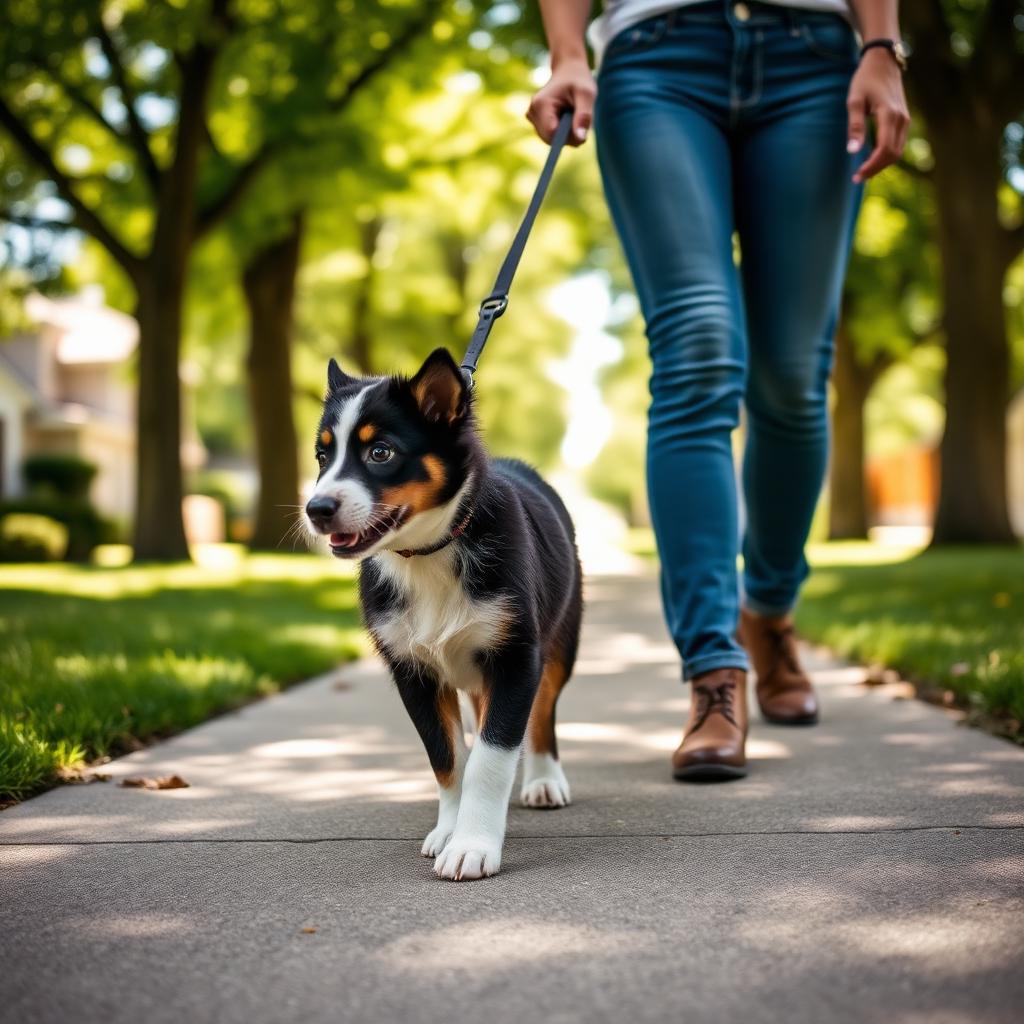
Loose-Leash Walking for Puppies: How to Stop the Pulling Before It Starts
A force-free, mechanically simple way to teach a puppy to walk on a loose leash. Equipment, drills, and progression included.
9 min read

Obedience Training
How to Teach a Puppy Sit, Down, and Stay: The Complete Foundation Guide
A certified trainer's step-by-step protocol for teaching sit, down, and stay to a puppy — with luring, marker timing, duration ladders, and common mistakes.
14 min read
Obedience Training
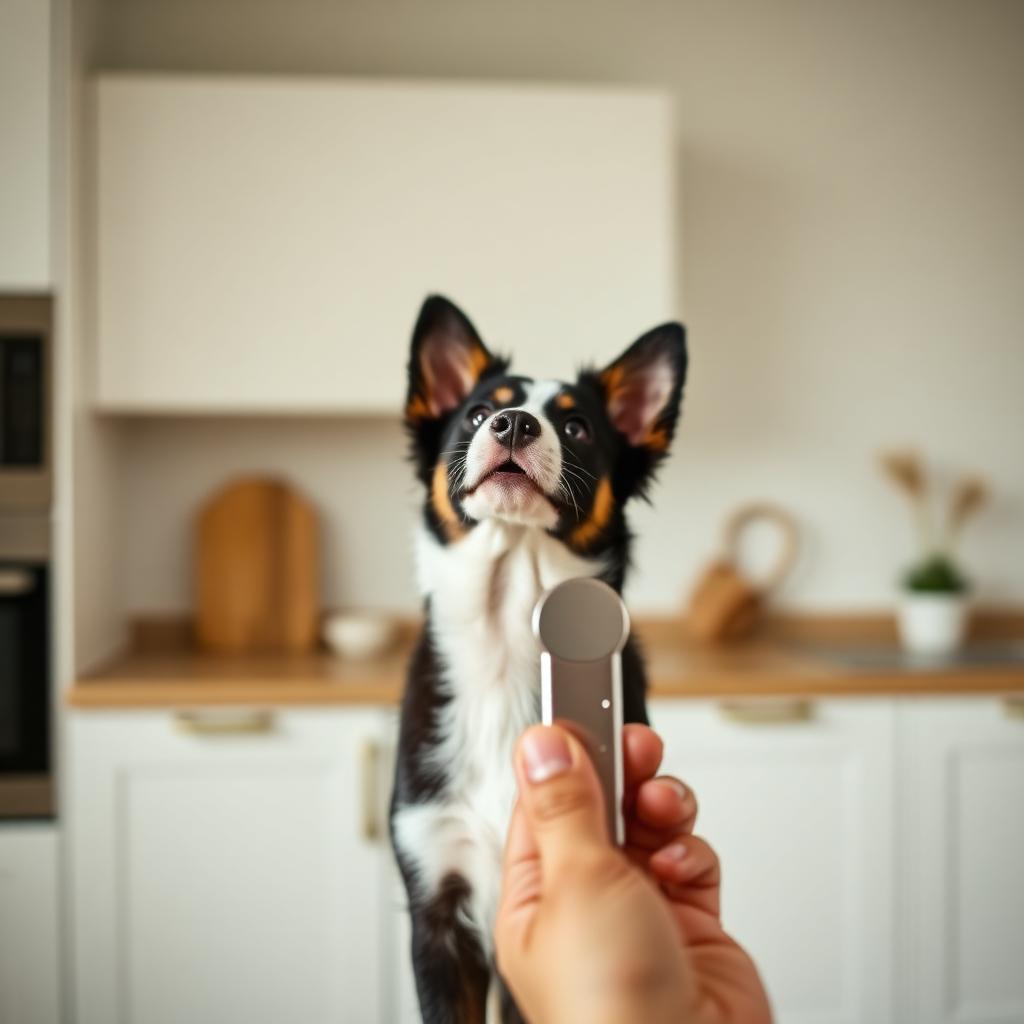
Clicker Training vs. Verbal Marker: Which One Should You Use With Your Puppy?
A CPDT-KA trainer compares clicker training and verbal markers for puppies — timing, mechanics, pros and cons, and how to switch between them.
12 min read

Obedience Training
How to Stop a Puppy From Biting Hands: A Bite Inhibition Protocol That Actually Works
A certified trainer's evidence-based protocol for stopping puppy biting. Bite inhibition, redirection, arousal management, and what not to do.
13 min read
Continue learning
Explore the full The Ultimate Puppy Training Guide
A complete, trainer-reviewed roadmap to puppy training from week 8 through 12 months — foundations, obedience, leash manners, and adolescence.