Obedience Training
Loose-Leash Walking for Puppies: How to Stop the Pulling Before It Starts
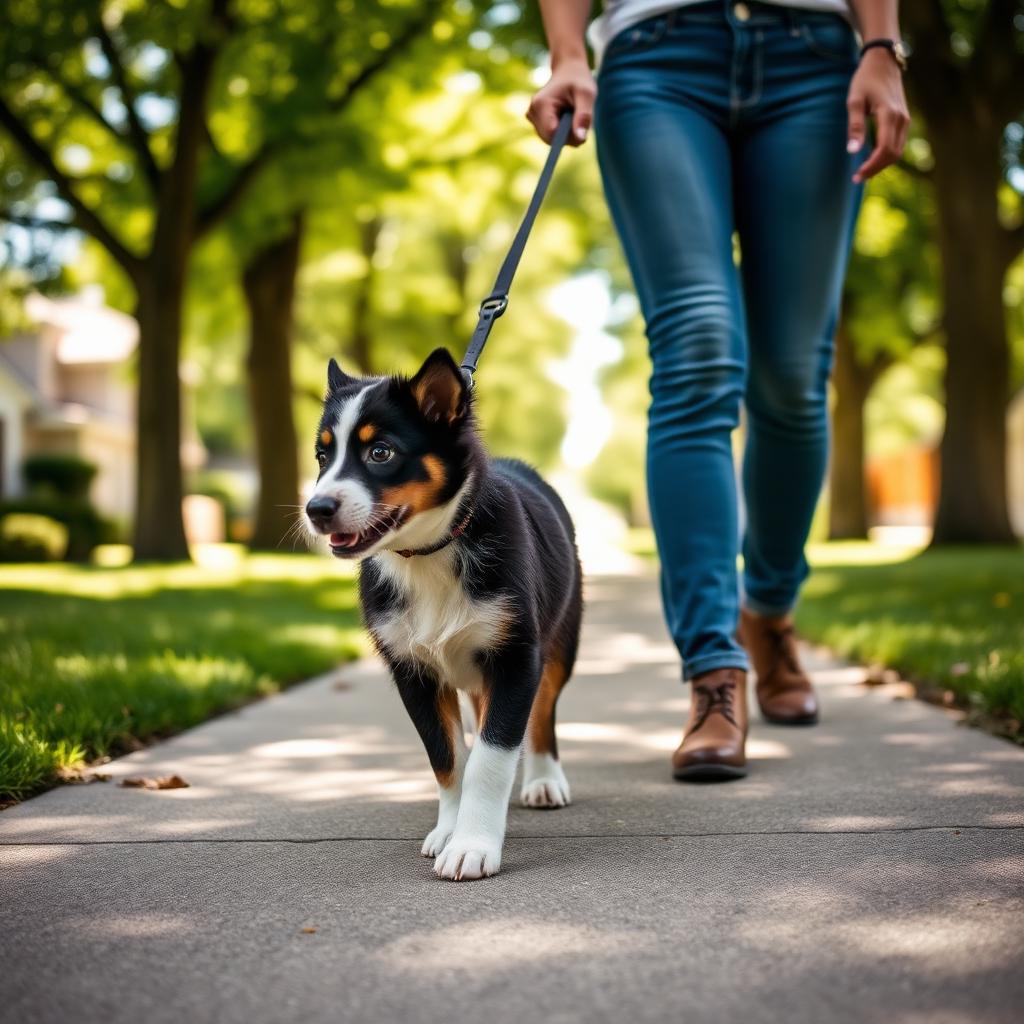
Pulling on the leash is the single most common reason owners stop walking their dog by month six. The fix is not a corrective tool — it is teaching your puppy, while they are still light and curious, that a slack leash is the fastest way to get to the interesting thing.

Equipment that helps (and hurts)
Use a flat collar or a Y-shaped front-clip harness. Skip retractable leashes (they teach constant tension), prong collars, and choke chains — all increase the risk of neck injury in puppies whose growth plates are still open.
Indoor foundations first
Most owners take their puppy outside on day one and ask them to do a complex skill in the most distracting environment in their life. Instead, train the mechanics indoors first.
- Stand still in the kitchen with treats. Mark and feed every time the puppy looks at you. Two minutes.
- Take one step. Mark and feed the puppy at your leg. Two minutes.
- Walk five steps in a straight line, feeding at your leg every step or two.
- Add gentle turns. Always pay on the inside of the turn.
Outdoor progression
Start in your driveway or front yard, not on a busy sidewalk. The rule of thumb: the higher the distraction, the higher the rate of reinforcement. In a quiet driveway you might pay every three steps. In a busy park you may need to pay every step for the first few sessions.
The 'be a tree' rule
When the leash goes tight, stop moving. Do not pull back, do not jerk, do not say anything. The instant the leash loosens, mark and continue. This single rule, applied with absolute consistency for two weeks, will teach most puppies that pulling never works.
Key takeaways
- Train the mechanics indoors before you ever leave the driveway.
- Pay heavily and often in distracting environments — you can fade rewards later.
- Be a tree: tight leash = no forward motion. Apply it 100 percent of the time.
Frequently asked questions
- What age should I start leash training a puppy?
- The day they come home. Indoor foundations can begin at 8 weeks. Short outdoor walks on a loose leash can start once your vet clears the first vaccine.
- Why does my puppy pull on the leash?
- Puppies pull because pulling works — they get to the smell, dog, or person they want. Loose-leash walking flips that equation: a loose leash makes the world move closer; a tight one stops it.
- Are no-pull harnesses cruel?
- Front-clip Y-shaped harnesses are safe and welfare-friendly when fitted correctly. Avoid head halters on flat-faced breeds and prong or choke collars on puppies under a year old.
Interactive tools
Use with this guide
Keep reading

Puppy Basics
The Puppy Training Schedule: A Calm, Repeatable Plan for Your First 30 Days
A trainer-built, day-by-day puppy training schedule for the first month. Routines, potty timing, naps, socialization, and what to skip.
14 min read

Socialization
The Puppy Socialization Checklist: 14 Categories of Positive Experiences (3–14 Weeks)
A trainer-built socialization checklist for the critical 3–14 week window. People, dogs, surfaces, sounds, and handling — done safely.
12 min read
Obedience Training
Teaching Recall That Works in Distracting Environments
Why your puppy's recall falls apart in the park, and the 5-stage trainer protocol that makes 'come' reliable around dogs, smells, and squirrels.
12 min read

Obedience Training
How to Teach a Puppy the 'Place' Command (Settle on a Mat)
A step-by-step guide to teaching the 'place' command so your puppy settles calmly on a mat — even during dinner, doorbells, and Zoom calls.
10 min read

Obedience Training
How to Teach a Puppy Sit, Down, and Stay: The Complete Foundation Guide
A certified trainer's step-by-step protocol for teaching sit, down, and stay to a puppy — with luring, marker timing, duration ladders, and common mistakes.
14 min read
Obedience Training
Clicker Training vs. Verbal Marker: Which One Should You Use With Your Puppy?
A CPDT-KA trainer compares clicker training and verbal markers for puppies — timing, mechanics, pros and cons, and how to switch between them.
12 min read
Continue learning
Explore the full The Ultimate Puppy Training Guide
A complete, trainer-reviewed roadmap to puppy training from week 8 through 12 months — foundations, obedience, leash manners, and adolescence.