Obedience Training
How to Stop a Puppy From Biting Hands: A Bite Inhibition Protocol That Actually Works
Nothing sends a new puppy owner into a spiral faster than a razor-sharp needle-mouth clamping onto a forearm at 8 p.m. It's the single most common reason clients book an emergency consult — usually around week two, when the honeymoon ends and the biting starts. Here is the good news I open every consult with: puppy biting is normal, it is developmentally necessary, and, handled correctly, it resolves almost entirely by five to six months of age. Handled incorrectly, it can escalate. This is exactly the protocol I use to route a household from bloody sleeves back to peaceful evenings.

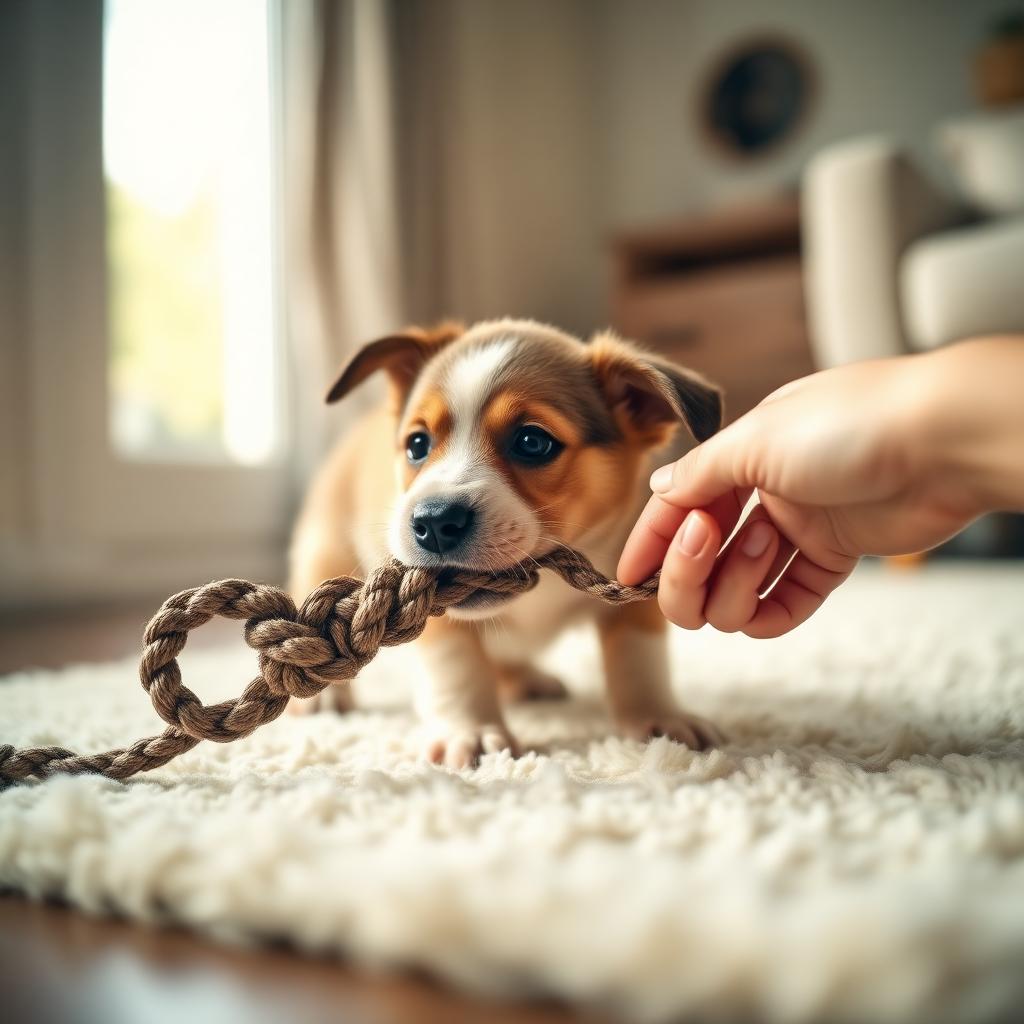
Why puppies bite hands in the first place
Between 8 and 20 weeks, puppies bite for four overlapping reasons: teething (physical relief), play (that's how they wrestled with siblings), overtiredness (a puppy version of a toddler meltdown), and information-gathering (mouths are how they explore texture and pressure). The vast majority of hand biting you'll see is a blend of the last three, not aggression. Understanding which one is driving the current episode is the difference between a fix that works and a fix that just moves the problem.
This matters because 'no bite!' works on none of these root causes. Yelling at an overtired puppy doesn't make them less tired; it makes them more aroused. Punishing a play-biting puppy doesn't teach a softer mouth; it teaches them not to trust hands.
Read the arousal, not just the teeth
Before every biting episode, there is a rising arousal curve. Body stiffens for a beat, then goes loose. Tail flicks fast, low. Play bows, spins, and finally the leap-and-nip. If you can identify the curve, you can intervene at 40 percent arousal — where redirection works — instead of at 100 percent, where nothing works.
- Green zone (calm): sniffing, chewing on a toy, blinking softly.
- Yellow zone (rising): faster movement, mouth open, ears forward.
- Orange zone (bordering): hard eyes, stiffened body, quick jerky play bows.
- Red zone (over threshold): frantic nipping, running past you and grabbing skin, unable to hear a cue.
Your job is to notice yellow and act, not wait for red. Almost every 'shark attack' evening episode I've observed with clients had a clear yellow signal 45 to 90 seconds earlier.
The four-step response protocol
When teeth land on skin, run this in order, every time. Consistency is what teaches the puppy the pattern.
- Freeze your hand for one full second. Movement is fuel. A still hand is boring.
- Say a neutral marker ('oops' or a quiet 'ah'). Do not yell.
- Stand up and step over a baby gate or into a pen for 10–20 seconds. This is the social consequence: play stops.
- Return calmly, offer an appropriate chew (frozen washcloth, Kong, yak chew), and reinforce settling on a mat.
This is called 'negative punishment' in behavior terms — removing something the puppy wants (your attention) to reduce the behavior. It works because it mirrors the natural consequence a littermate would deliver. Done consistently, most puppies dial the biting down within 10 to 14 days.
Redirection that actually works
Redirection is the front half of the strategy. The rule is redirect early (yellow zone), not late (red zone). Once a puppy is in full nip-attack mode, a toy shoved in their face reads as reward, not replacement. Redirect proactively when you see the puppy's mouth starting to open on approach — offer the tug or chew before their teeth reach skin.
Keep a chew station within reach of every seat in your home. In my clients' homes, we place one basket of appropriate chews next to the couch, one by the desk, and one near the front door. Friction is the enemy — if the toy is upstairs, you'll grab the closest thing (which is your sleeve).
Preventing bite escalation with the four levers
- Sleep: Puppies under 16 weeks need 18–20 hours a day. Overtired puppies bite hardest. Nap first, train second.
- Enrichment: 15 minutes of licking, sniffing, or chewing burns more mental energy than 30 minutes of chase games.
- Exercise dose: Match physical exercise to age (roughly 5 minutes of structured exercise per month of age, twice a day).
- Structured off-switch: Teach 'settle on a mat' during the day so the puppy has an alternative behavior at night.
When there are kids in the home
Puppy-child biting is the highest-risk version of this problem because kids move fast, squeal, and can't produce a still, boring hand. My protocol with families: kids never rough-house with the puppy under six months, adults do all leash-and-treat work in the child's presence, and every interaction is supervised through a baby gate. Our full guide on introducing a puppy to children safely walks through the household choreography.
What not to do
- Do not scruff, alpha-roll, or pin your puppy. Studies since the 1980s have consistently shown these tactics increase fear-based aggression.
- Do not stick a thumb down the puppy's throat. This is a decades-old myth that damages trust and can injure the puppy.
- Do not spray water in the puppy's face. It suppresses the behavior briefly but poisons the human-puppy relationship.
- Do not yelp loudly like a littermate. Recent research suggests this excites many puppies rather than deterring them.
- Do not tell the puppy 'no' 40 times an hour. Repeated meaningless corrections make the word invisible.
When it ends
Realistic timeline: worst biting between 10 and 16 weeks, noticeable improvement by 18 to 20 weeks, near-complete resolution by 5 to 6 months. If your puppy is over 5 months and still biting hard, or if bites are increasing in intensity rather than decreasing, that's the point to bring in a certified trainer or veterinary behaviorist — the pattern has shifted from developmental biting to a behavior that needs a professional workup.
Key takeaways
- Puppy biting is developmental — expect it, plan for it, and it will resolve by five to six months.
- Read the arousal curve; intervene in the yellow zone, not the red.
- Freeze, mark neutrally, remove attention, then reinforce a calm alternative. Repeat consistently.
- Sleep and appropriate chews solve more biting than any correction ever will.
- Punitive tactics increase fear and slow — never speed — the timeline.
Frequently asked questions
- Why does my puppy bite me but not my partner?
- Usually it's a movement or arousal difference — one person plays high-energy, the other doesn't. Sometimes it's timing: the puppy has learned that one person's hands move faster and are more fun to catch.
- Does saying 'ouch' loudly work?
- For some puppies, yes; for many, it escalates arousal. If your loud yelp makes the puppy bite harder, drop the yelp and use the freeze-and-remove protocol above.
- Is puppy biting a sign of aggression?
- In dogs under 5 months, almost never. Developmental biting is normal. Watch for context: relaxed body plus mouthing = play; stiff body, hard stare, low growl plus bite = a different conversation with a professional.
- How do I stop witching-hour zoomie biting at 8 p.m.?
- It's overtiredness. Move the last nap later, add a 10-minute lick mat before 7 p.m., and be ready to end play the second yellow-zone signals appear. Most families see this witching hour end within a week.
- Should I use a spray bottle or a bitter spray on my hands?
- No. Both suppress the symptom without teaching the puppy what to do instead, and both can create hand-shy or startle-prone dogs.
Interactive tools
Use with this guide
Keep reading

Puppy Health
The Puppy Teething Timeline: What to Expect Month by Month
Vet-reviewed puppy teething timeline. When baby teeth fall out, what biting really means, and the safest chews to offer at every stage.
12 min read
Obedience Training
How to Teach a Puppy the 'Place' Command (Settle on a Mat)
A step-by-step guide to teaching the 'place' command so your puppy settles calmly on a mat — even during dinner, doorbells, and Zoom calls.
10 min read

Socialization
Introducing Your Puppy to Children Safely: A Family Trainer's Playbook
Step-by-step protocols for safe puppy-child introductions, age-appropriate rules for kids, and the body-language signals every parent should know.
11 min read

Obedience Training
How to Teach a Puppy Sit, Down, and Stay: The Complete Foundation Guide
A certified trainer's step-by-step protocol for teaching sit, down, and stay to a puppy — with luring, marker timing, duration ladders, and common mistakes.
14 min read

Obedience Training
Puppy Impulse Control Games: 8 Trainer-Approved Exercises for a Thinking Dog
Eight impulse-control games a certified trainer uses to teach puppies to pause, think, and choose calm — from Doggy Zen to the Premack pattern.
12 min read
Obedience Training
How to Teach a Puppy 'Leave It' and 'Drop It': A Two-Cue Safety Protocol
A CPDT-KA trainer's step-by-step protocol for teaching leave it and drop it — the two cues that keep a puppy safe from sidewalk hazards and chewed shoes.
12 min read
Continue learning
Explore the full The Ultimate Puppy Training Guide
A complete, trainer-reviewed roadmap to puppy training from week 8 through 12 months — foundations, obedience, leash manners, and adolescence.