House Training
How to Stop Puppy Submissive and Excitement Urination (Without Making It Worse)
Of all the house-training calls I take, the saddest are from owners convinced their puppy is 'spiting' them. The puppy crouches, ears back, and a small puddle appears the second they walk through the door. Then the owner sighs, the puppy gets scolded, and the next greeting is worse. This is not a house-training problem and it is absolutely not spite. It's a wiring issue — and a fully fixable one — but only if you understand the difference between submissive and excitement urination, and stop doing the well-meaning things that reinforce both.

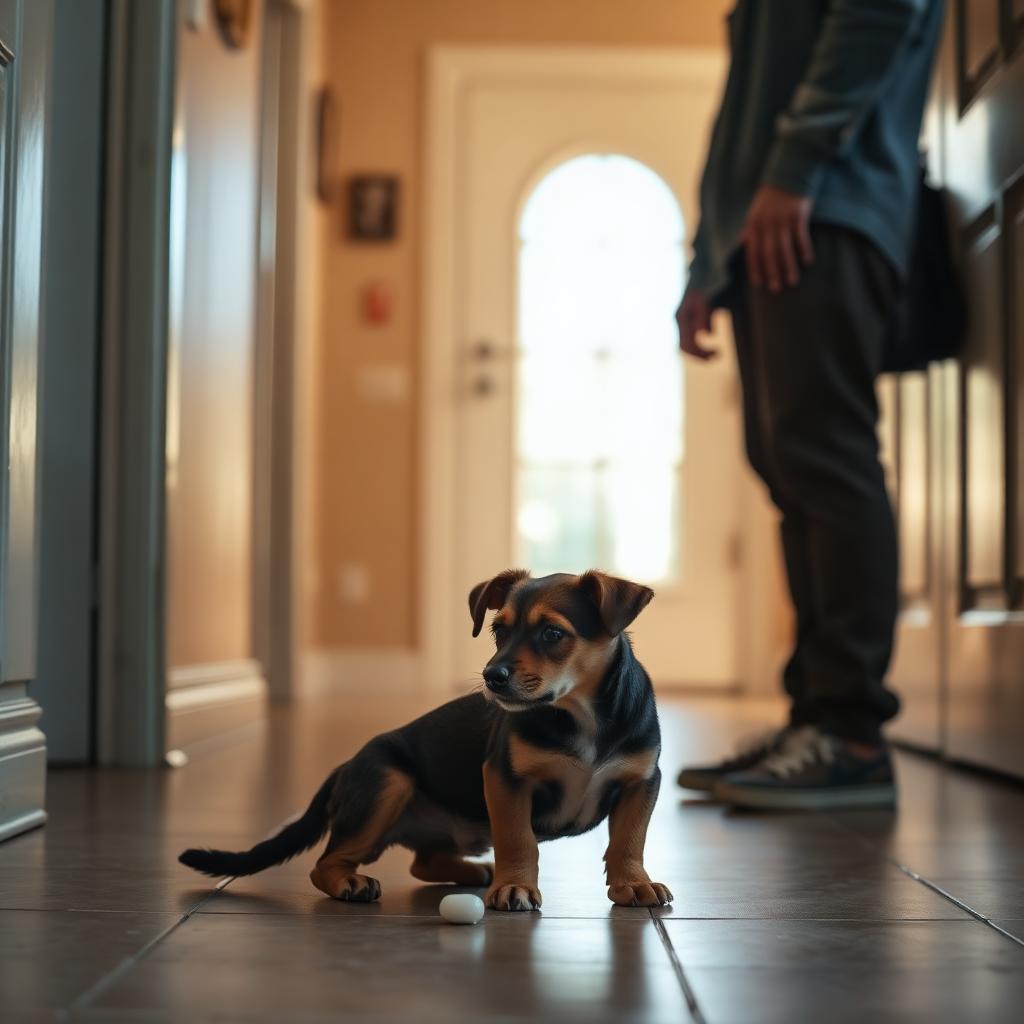
Submissive vs excitement urination: they look similar, they aren't
Submissive urination is a body-language conversation. The puppy lowers their head, tucks their tail, sometimes rolls partly onto a hip, and releases a small amount of urine. It is a deeply ingrained appeasement signal that says 'I'm not a threat.' Excitement urination, by contrast, looks like a happy, wiggling puppy whose bladder simply hasn't caught up with their nervous system — the body releases urine because the sphincter muscles haven't matured enough to override arousal.
Telling the two apart matters because the fixes are nearly opposite. Submissive urination requires lowering social pressure. Excitement urination requires lowering arousal. Confuse them and you'll make one worse while trying to solve the other.
Why scolding makes it dramatically worse
When a puppy who already pees from social pressure is scolded for peeing, the social pressure increases. The puppy now anticipates pressure on every greeting, which guarantees more appeasement urine. In my consult notes from the last two years, scolding is by far the most common reason a 4-month-old case becomes a 9-month-old case. The rule is iron-clad: never react to the puddle in front of the puppy. Clean it later, after the puppy is out of the room.
Fixing submissive urination: shrink the social pressure
Submissive urination is triggered by classic 'looming' cues: direct eye contact, leaning over the puppy, reaching from above, loud or high-pitched voices, and full-frontal body orientation. Strip every one of these out of greetings for the next four weeks.
- Approach at a sideways angle, never head-on.
- Crouch sideways to greet — never lean over the puppy.
- Use a calm, low voice. No baby-talk register.
- Avoid eye contact for the first 10 seconds; let the puppy look at you first.
- Pet under the chin or chest, not on top of the head.
- Move the greeting outdoors or near the door, where any urine is easy to clean — this removes your own anxiety, which the puppy reads instantly.
Pair greetings with confidence-building work in other contexts. Short, easy training reps that end in success — sit, hand target, find-it games — raise the puppy's general sense of competence. The 'place' command we cover in our settle on a mat guide is excellent for this because it gives the puppy a predictable, low-pressure default.
Fixing excitement urination: lower the arousal ceiling
Excitement urination is mostly a developmental issue. Roughly 75% of puppies grow out of it between 4 and 6 months as the urinary sphincter matures. Your job in the meantime is to keep arousal low enough that the immature plumbing isn't overwhelmed.
- Greet outside whenever possible for the first 60 days — grass forgives.
- Ignore the puppy completely for the first 60 seconds when you come home. Hang your coat, check your mail, then greet quietly.
- Drop a small handful of treats on the floor as you walk in — sniffing engages the seeking system, which lowers arousal.
- Skip the high-pitched 'hiiiiii baby!' voice. It feels good to you and it floods them.
- Take the puppy out for a planned potty trip 5 minutes before any expected arrival.
Rewriting the greeting ritual for the whole household
Everyone in the home has to run the same script for at least three weeks. One enthusiastic family member who scoops the puppy up will undo a week of patient work in 30 seconds. Print the rules and stick them on the front door if you have to. Children especially need explicit, age-appropriate instructions — squatting sideways, calm voice, treats on the floor.
Brief visitors before they walk in. A 30-second text — 'please ignore the puppy for the first minute, no eye contact' — saves you a puddle and a confidence dip. After three weeks of clean greetings, most puppies stop dribbling at the door entirely. The behavior fades because the trigger fades.
When to involve your vet
Rule out medical causes if you see any of the following: dribbling that occurs lying down or asleep (a hallmark of urinary incontinence rather than behavior), a sudden change after a clean history, frequent squatting with little output, blood-tinged urine, or excessive water intake. Urinary tract infections are common in young female puppies and present almost identically to a stubborn house-training regression. A simple urine culture rules it in or out and saves weeks of frustration.
If you're managing other house-training issues in parallel, our nighttime puppy potty training guide and the broader 30-day training schedule pair well with this protocol. The throughline is the same: lower pressure, raise predictability, and let the puppy's body and brain catch up to each other.
Key takeaways
- Submissive urination needs less social pressure; excitement urination needs less arousal.
- Never scold a puppy for these puddles — scolding is the single biggest reason cases get worse.
- Rule out a UTI if behavior changes suddenly or you see signs of incontinence at rest.
Frequently asked questions
- At what age do puppies grow out of excitement urination?
- Most outgrow it between 4 and 6 months as the urinary sphincter matures. A small percentage persist past 12 months and benefit from continued low-arousal greeting protocols rather than further training.
- Should I clean up the urine in front of the puppy?
- No. Leave the room with the puppy first, then come back to clean. Cleaning in front of them adds attention to the puddle and increases anxiety about the next greeting.
- Will a belly band fix submissive urination?
- A belly band manages the symptom but does not address the cause. Use one only for high-stakes situations like visitors — never as the long-term solution, and never tight enough to irritate skin.
- My puppy pees when my partner comes home but not when I do. Why?
- Almost always a greeting style difference. The partner is likely louder, leaning over, or making direct eye contact. Coach them through the calm-greeting script and the asymmetry usually resolves within two weeks.
Interactive tools
Use with this guide
Keep reading
Puppy Basics
The Puppy Training Schedule: A Calm, Repeatable Plan for Your First 30 Days
A trainer-built, day-by-day puppy training schedule for the first month. Routines, potty timing, naps, socialization, and what to skip.
14 min read
House Training
Nighttime Puppy Potty Training Without the Crying
Trainer's overnight puppy potty plan: hour-by-hour schedule, crate setup, and the three mistakes that keep owners awake for weeks.
11 min read
Obedience Training
How to Teach a Puppy the 'Place' Command (Settle on a Mat)
A step-by-step guide to teaching the 'place' command so your puppy settles calmly on a mat — even during dinner, doorbells, and Zoom calls.
10 min read
House Training
Crate Training a Puppy Without the Crying: A Step-by-Step, Welfare-First Method
A trainer's gentle, evidence-based protocol for crate training a puppy without distress vocalization. Day-by-day plan included.
11 min read
Socialization
The Puppy Socialization Checklist: 14 Categories of Positive Experiences (3–14 Weeks)
A trainer-built socialization checklist for the critical 3–14 week window. People, dogs, surfaces, sounds, and handling — done safely.
12 min read
Obedience Training
Loose-Leash Walking for Puppies: How to Stop the Pulling Before It Starts
A force-free, mechanically simple way to teach a puppy to walk on a loose leash. Equipment, drills, and progression included.
9 min read
Continue learning
Explore the full The House Training Hub
A complete, trainer-reviewed system for house training a puppy: crate work, potty schedules, overnight routines, and troubleshooting.