House Training
Crate Training a Puppy Without the Crying: A Step-by-Step, Welfare-First Method
Crying in a crate is not a personality flaw, and it is not something puppies 'just need to get used to.' It is a distress signal from a social animal who has been alone for the first time. The good news: with a careful introduction over five to seven days, more than 90 percent of the puppies I coach sleep silently in their crate by the end of week two.

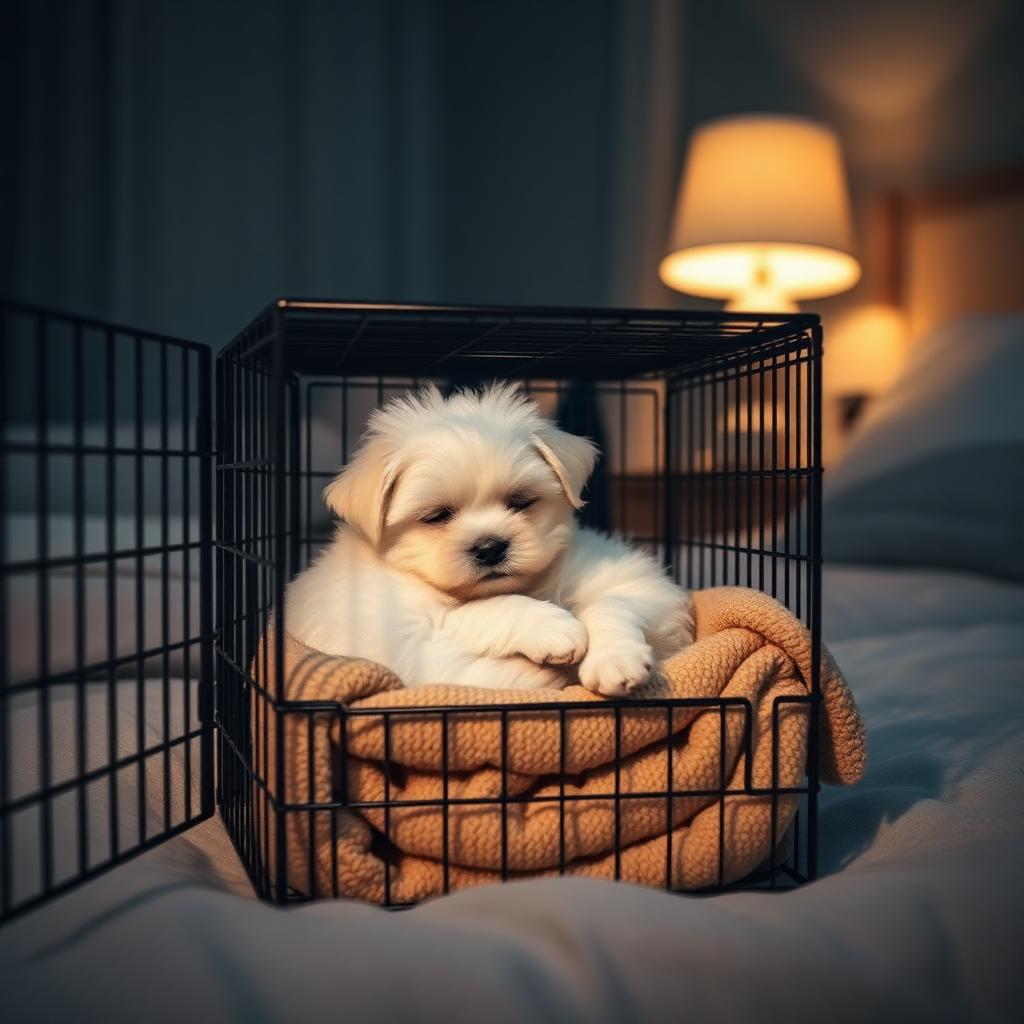
Why crate training is worth doing well
A properly introduced crate becomes the single most valuable management tool in your home. It accelerates potty training, prevents destructive chewing during the teething months, makes vet visits and travel safer, and gives your puppy an off-switch in a busy household. The catch is that 'properly introduced' is doing a lot of work in that sentence.
Setting up the crate
- Size: just big enough to stand up, turn around, and lie down stretched. Too big = potty inside.
- Location: in a quiet but social part of the home — usually a bedroom for the first month.
- Bedding: a flat washable mat. Skip plush beds until potty training is rock-solid.
- One safe chew (a frozen Kong or a Yak chew sized for puppies).
- Cover three sides with a breathable blanket to create a den-like feel.
The 7-day introduction protocol
Days 1–2: Make the crate the best room in the house
Door stays open. Toss a treat in, let the puppy go in and out freely. Feed every meal just inside the door. We are not closing the door yet.
Days 3–4: Short closures while you sit beside it
Close the door for 10 seconds while the puppy eats a stuffed Kong. Open before they finish. Build to two minutes over the day. Sit on the floor next to the crate.
Days 5–7: Distance and duration
Stand up, walk to the kitchen, return. Build to five minutes of you out of sight. Always return before the puppy becomes anxious — we want them to learn that the crate predicts your return, not your absence.
The first nights
For the first 7 to 14 nights, place the crate next to your bed. A puppy taken from their litter is grieving — proximity matters. You can drape a hand into the crate. This single change eliminates roughly 70 percent of first-week night crying in my client data.
Take the puppy out for a silent, business-only potty trip once between midnight and 5 a.m. for puppies under 12 weeks. No play, no praise, straight back to the crate.
Troubleshooting persistent crying
If your puppy is crying after a careful introduction, run this checklist before assuming it's behavioral: have they pottied in the last 30 minutes? Is the crate temperature comfortable? Are they teething (frozen washcloth can help)? Have you slipped to too much duration too fast (cut your time in half and rebuild)?
Key takeaways
- Crate training is a 7-day introduction, not a one-night event.
- Crate near your bed for the first two weeks prevents most night crying.
- Always end the session before the puppy becomes anxious — you are building trust, not tolerance.
Frequently asked questions
- Should I ignore my puppy crying in the crate?
- No. Ignoring distress in a young puppy damages the relationship and can create separation anxiety. Instead, prevent the crying by building duration gradually and keeping the crate near you at night for the first two weeks.
- How long can an 8-week-old puppy stay in a crate?
- During the day, no more than one hour at a time without a potty break. Overnight, 8-week-old puppies typically need one bathroom trip around the four-hour mark.
- Where should the crate go at night?
- Next to your bed for the first 7 to 14 nights. After your puppy is sleeping calmly through the night, you can gradually relocate the crate to its long-term spot over 5 to 7 days.
Interactive tools
Use with this guide
Keep reading

Puppy Basics
The Puppy Training Schedule: A Calm, Repeatable Plan for Your First 30 Days
A trainer-built, day-by-day puppy training schedule for the first month. Routines, potty timing, naps, socialization, and what to skip.
14 min read

Socialization
The Puppy Socialization Checklist: 14 Categories of Positive Experiences (3–14 Weeks)
A trainer-built socialization checklist for the critical 3–14 week window. People, dogs, surfaces, sounds, and handling — done safely.
12 min read

House Training
Nighttime Puppy Potty Training Without the Crying
Trainer's overnight puppy potty plan: hour-by-hour schedule, crate setup, and the three mistakes that keep owners awake for weeks.
11 min read
House Training
How to Stop Puppy Submissive and Excitement Urination (Without Making It Worse)
Why puppies pee when greeting people, and the calm, evidence-based steps to fix submissive and excitement urination without damaging confidence.
10 min read

Obedience Training
Loose-Leash Walking for Puppies: How to Stop the Pulling Before It Starts
A force-free, mechanically simple way to teach a puppy to walk on a loose leash. Equipment, drills, and progression included.
9 min read

Puppy Health
The Puppy Vaccination Schedule, Explained: What, When, and Why
A plain-English guide to the core puppy vaccine schedule from 6 to 16 weeks, plus optional vaccines and what to expect at the vet.
8 min read
Continue learning
Explore the full The House Training Hub
A complete, trainer-reviewed system for house training a puppy: crate work, potty schedules, overnight routines, and troubleshooting.