Obedience Training
How to Teach a Puppy the 'Place' Command (Settle on a Mat)
Of every obedience cue I've taught in fifteen years of professional training, 'place' is the one clients thank me for most often — usually six months later, mid-dinner-party, when their dog is on a mat in the corner instead of begging for cheese. 'Place' is not a flashy trick. It's a quietly transformative behavior that teaches a puppy how to be in a room without being the center of it. Done right, it becomes the off-switch your home revolves around.

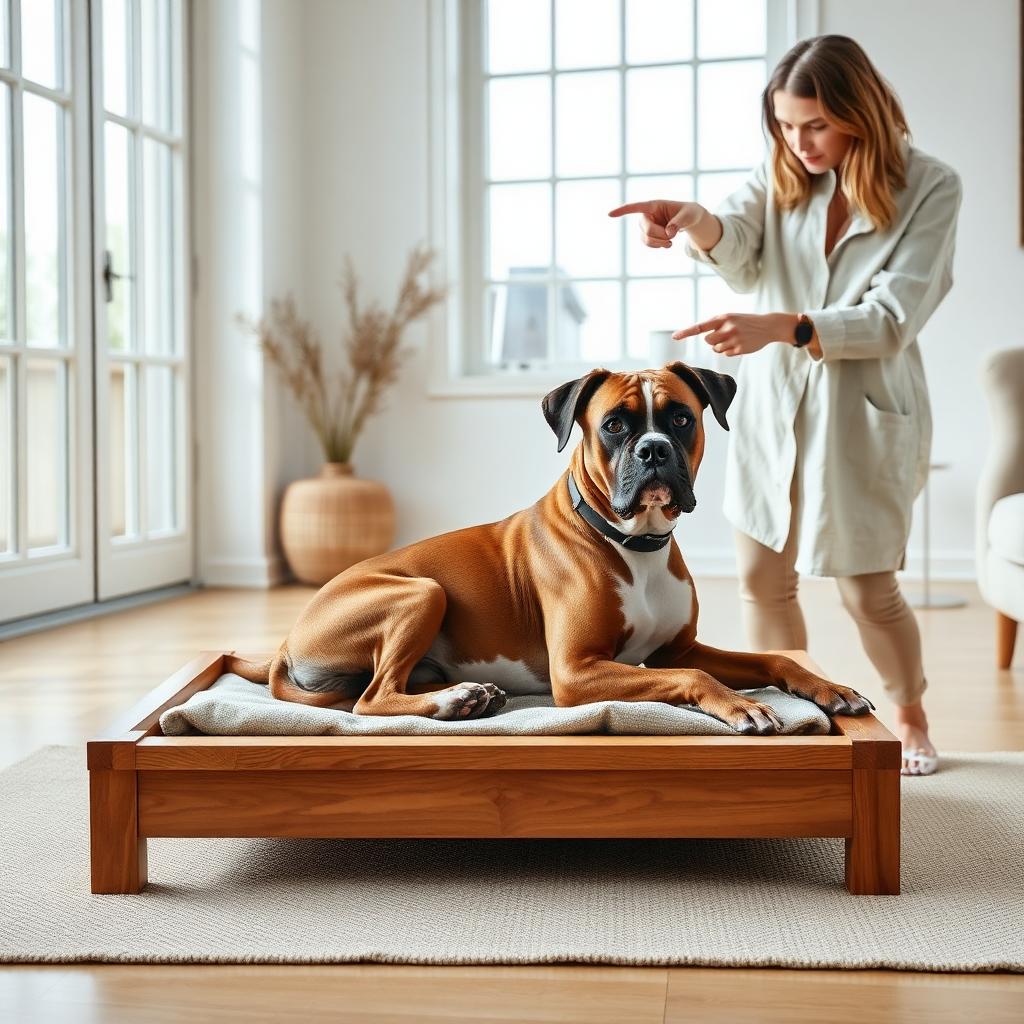
Why 'place' beats a plain 'down-stay'
A down-stay is a position; 'place' is a location. The distinction matters because dogs are spatial learners. Once a mat means calm, the mat itself does most of the cueing — you stop having to police a position and the dog starts choosing relaxation. That is exactly what you want in a busy household, and it's why service-dog programs teach a station behavior before any obedience polish.
If you're already running our 30-day puppy training schedule, slot 'place' into week two, right after a reliable sit and a name response. It pairs especially well with loose-leash walking — both behaviors teach the puppy that calm focus is what unlocks the next good thing.
Choose a mat, a marker, and the right rewards
Use a mat that is obviously different from any other surface your puppy lies on. A raised cot-style bed or a thin, distinct rug works far better than a fluffy round bed they already sleep on. The visual and tactile contrast is what makes the mat a clear cue. Keep the mat reserved for training for the first month — don't leave it out as casual furniture.
- Marker: a clicker or a clean verbal 'yes' delivered the instant paws touch the mat.
- Rewards: pea-sized, soft, high-value (boiled chicken, freeze-dried liver). Boring kibble won't outpay floor distractions.
- Location: a low-traffic corner of the room you spend most evenings in.
Phase 1 — Luring onto the mat (sessions 1–4)
Sit on the floor with the mat between you and the puppy. Toss a treat onto the mat. The moment all four paws land on it, mark ('yes') and feed a second treat from your hand while they're still on the mat. Then toss a 'reset' treat onto the floor a few feet away so they step off, and repeat. Do ten reps. End the session before the puppy gets bored — three short sessions beat one long one.
Add the verbal cue 'place' only once the puppy is reliably stepping onto the mat the moment you gesture toward it. The cue is the last thing added, not the first — a common amateur mistake is to cue 'place, place, place' while the puppy has no idea what the word predicts.
Phase 2 — Duration and the relaxation default (sessions 5–12)
Now you build time. Cue 'place,' wait two seconds, mark and reward in position. Build to five seconds, then ten, then twenty. The critical move is to deliver every reward between the puppy's front paws while they're lying on the mat. That single habit — feeding low and on the mat — does more than any verbal cue to teach the body posture you actually want.
Watch for the 'sigh.' Almost every puppy, somewhere between minute three and minute eight of a duration session, will exhale audibly and shift a hip. That sigh is the parasympathetic system kicking in. The instant you see it, mark calmly and feed two treats in a row. You are paying for the relaxation, not the position.
Phase 3 — Distance, distraction, and the release word
Only once the puppy can hold a relaxed down on the mat for two minutes in a quiet room do you add distance. Step one foot back, return, reward on the mat. Build to crossing the room. Then add distractions in this order: a dropped sock, a rolling ball at distance, a knock on a wall, the doorbell. If the puppy breaks, do not scold — silently lead them back to the mat and reduce the difficulty by 30%.
Add a release word — I use 'free' — that explicitly ends the behavior. Without a release, the puppy doesn't know when 'place' is over and will start self-releasing the moment your attention drifts. This is the single most common reason 'place' falls apart in month two.
Real-world applications: where 'place' earns its keep
- Dinner time — mat in view of the table, far enough away that you're not feeding from your plate.
- Doorbell — pair 'place' with the doorbell sound so the trigger becomes the cue.
- Cooking — keeps the puppy out from under your feet and counter-surfing temptation.
- Visitor management — calmer greetings, lower arousal at the door.
- Vet and groomer waiting rooms — a portable mat travels with you and gives the puppy a known safe zone.
Troubleshooting the three most common stalls
If your puppy keeps popping up: your duration is being built too fast. Drop back to a duration they can succeed at 8 out of 10 times and rebuild more slowly. If they refuse to lie down on the mat: the surface is too slippery or too soft — try a different texture. If they only go to 'place' when you have visible treats: you've turned the food into a bribe instead of a paycheck; switch to delivering treats from a hidden pouch or a counter behind you.
Key takeaways
- Place is a location behavior, not a position — that's what makes it durable.
- Build duration before distance; reward the sigh, not just the down.
- Always end 'place' with an explicit release word like 'free.'
Frequently asked questions
- At what age can I start teaching place?
- Any time after 8 weeks. Keep the sessions to 2–3 minutes each and reward calm posture, not perfect duration. A 10-week-old puppy can realistically hold 'place' for 30 to 60 seconds within two weeks of training.
- Should I use a clicker for the place command?
- It helps, especially in phase 2 when you're capturing the small relaxation signals like a sigh or a hip shift. A clean verbal marker works too — what matters is precision, not the tool.
- How long should my puppy be able to hold place?
- Realistic goals: 2 minutes by week 2 of training, 10 minutes by week 4, 30+ minutes for an adult dog with full proofing. Do not push duration faster than the puppy can succeed.
- Can I use place to fix jumping on guests?
- Yes — it's the most reliable fix I know. Train 'place' to high reliability first, then cue it before opening the door. The doorbell itself becomes the cue once the association is built.
Interactive tools
Use with this guide
Keep reading
Puppy Basics
The Puppy Training Schedule: A Calm, Repeatable Plan for Your First 30 Days
A trainer-built, day-by-day puppy training schedule for the first month. Routines, potty timing, naps, socialization, and what to skip.
14 min read
House Training
Crate Training a Puppy Without the Crying: A Step-by-Step, Welfare-First Method
A trainer's gentle, evidence-based protocol for crate training a puppy without distress vocalization. Day-by-day plan included.
11 min read
Obedience Training
Loose-Leash Walking for Puppies: How to Stop the Pulling Before It Starts
A force-free, mechanically simple way to teach a puppy to walk on a loose leash. Equipment, drills, and progression included.
9 min read
Obedience Training
Teaching Recall That Works in Distracting Environments
Why your puppy's recall falls apart in the park, and the 5-stage trainer protocol that makes 'come' reliable around dogs, smells, and squirrels.
12 min read
Obedience Training
How to Teach a Puppy Sit, Down, and Stay: The Complete Foundation Guide
A certified trainer's step-by-step protocol for teaching sit, down, and stay to a puppy — with luring, marker timing, duration ladders, and common mistakes.
14 min read
Obedience Training
Clicker Training vs. Verbal Marker: Which One Should You Use With Your Puppy?
A CPDT-KA trainer compares clicker training and verbal markers for puppies — timing, mechanics, pros and cons, and how to switch between them.
12 min read
Continue learning
Explore the full The Ultimate Puppy Training Guide
A complete, trainer-reviewed roadmap to puppy training from week 8 through 12 months — foundations, obedience, leash manners, and adolescence.