Nutrition & Feeding
How to Transition Puppy Food Safely: A Trainer + Vet Protocol
The bag runs out on a Tuesday. The pet store is out of your brand. You grab something that looks similar, tip it into the bowl on Wednesday, and by Friday you have soft stool on the living-room rug and a puppy who doesn't want breakfast. This is the most common — and most preventable — nutrition mistake I see in my practice. A ten-minute plan on day zero saves you a week of GI upset, and it works whether you're switching brands, life stages, or coming home from the breeder with a bag of something you'd never buy again.

Why puppies need a slow transition
Adult dogs harbor a fairly stable gut microbiome that can absorb an ingredient swap in a day or two. Puppies are still building theirs. The bacterial populations that digest a chicken-and-rice formula are not the same populations that digest lamb-and-oats, and every abrupt switch is a small ecosystem crash that shows up as vomiting, loose stool, or gas. Slow transitions let the microbes shift proportionally rather than get replaced overnight.
There is also a palatability angle. Puppies who are switched abruptly often refuse the new food for the first day, which triggers owner panic and creates the picky-eater loop we describe in our transition-to-adult-food playbook. A gradual mix side-steps this by pairing every bite of unfamiliar food with a bite of the food they already trust.
The 10-day transition schedule
This is the schedule most veterinary nutritionists teach. It is deliberately conservative — you can compress it to seven days for hardy, stable-stool puppies, and stretch it to fourteen days for known sensitive stomachs.
- Days 1–2: 75% old food, 25% new food.
- Days 3–4: 50% old food, 50% new food.
- Days 5–6: 25% old food, 75% new food.
- Days 7–10: 100% new food.
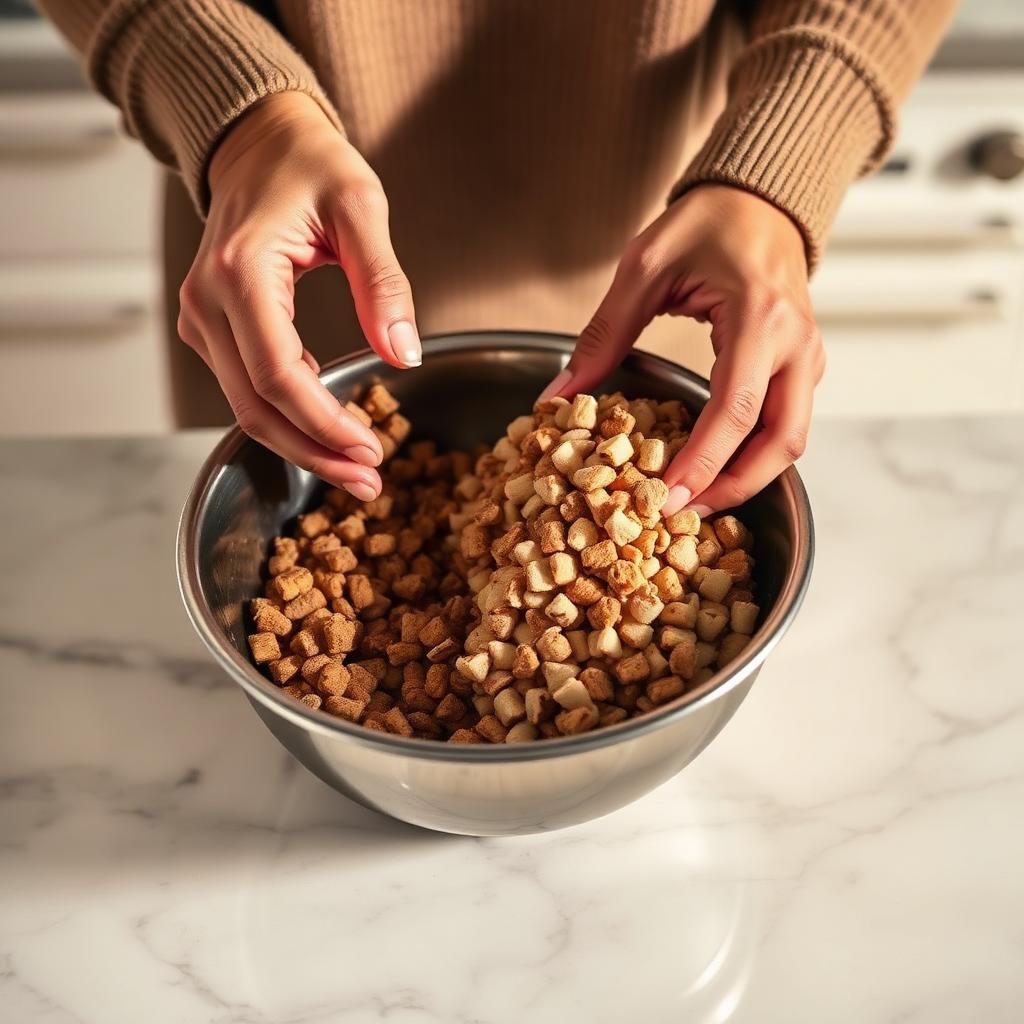
Mix the two foods thoroughly in a single bowl. Do not layer them. Puppies quickly learn to pick out the food they prefer and leave the rest, and layering trains that behavior. If you're feeding two different formats — kibble and fresh, for example — measure each by calorie, not by volume, and combine in the same meal.
Stool as your dashboard
Check stool consistency at every meal during a transition. A one-day dip to soft-formed is normal and does not require pausing. Two consecutive days of unformed stool, blood, or vomiting is a signal to hold at the current ratio for two extra days before advancing. If it still doesn't resolve, drop back to the previous step for three days.
Switching brands (or coming home from the breeder)
Ninety percent of the transitions I coach are brand switches: the breeder was feeding brand A, you want brand B, or the pet store is out. Always leave the breeder with at least two weeks' worth of the current food. Start the transition on day three at home, not day one — the puppy is already processing new water, new schedule, and new stress. Stacking a diet change on top of that is what turns a manageable homecoming into a diarrhea week.
Puppy to adult food
The switch to adult food is a bigger nutritional event than a brand switch — calorie density drops, calcium ratios shift, and satiety changes. Time it by adult size, not by an arbitrary birthday:
- Toy and small breeds (< 25 lb adult): 9–12 months.
- Medium breeds (25–50 lb adult): 12 months.
- Large breeds (50–90 lb adult): 15–18 months.
- Giant breeds (90+ lb adult): 18–24 months.
Use the same 10-day schedule, but recalculate portions on day one — adult formulas are typically 10–15% less calorie-dense per cup than the puppy version, so a straight one-to-one volume swap can leave a puppy hungry for a week. Our growth timeline tool has size-specific projections you can plug in.
When the transition goes wrong
If a puppy has watery stool for more than 24 hours, refuses food and water for more than 12, or shows any lethargy that your gut says is wrong, stop the transition and call your vet. Diarrhea in puppies under six months old is not a wait-and-see event. Our puppy diarrhea triage guide has the same-day-call list. For chronic soft stool that clears every time you go back to the old food, don't force the switch — that puppy is telling you the new formula isn't a fit, and the answer is a different brand, not more time.
Key takeaways
- Use a 10-day gradient (75/25 → 50/50 → 25/75 → 100) mixed thoroughly in one bowl.
- Wait 2–3 days after homecoming before starting a diet change.
- Time the switch to adult food by adult size, not birthday — large and giant breeds wait longest.
- Two consecutive days of unformed stool is a hold signal; back up one step.
- Puppy diarrhea for more than 24 hours is a vet call, not a wait-and-see.
Frequently asked questions
- How long should a puppy food transition take?
- Ten days is the default. Compress to seven for a puppy with a stable, formed stool history. Stretch to fourteen days for a puppy with any history of GI sensitivity.
- Can I add plain pumpkin during a transition?
- Yes — a teaspoon per 10 lb of body weight of plain, unsweetened canned pumpkin adds soluble fiber and often eases mild soft-stool episodes. Do not use pumpkin pie filling.
- My puppy refuses the new food. Should I starve them into it?
- No. Puppies under six months can develop hypoglycemia within 12 hours of not eating. Go back to a heavier ratio of the familiar food and advance more slowly. If refusal persists after a week, the food is likely not palatable to your puppy; try a different formula.
- What if I switch overnight by mistake?
- Watch for stool changes, vomiting, or lethargy for 72 hours. Most puppies recover fine but may have loose stool for two to three days. Feed smaller, more frequent meals and add plain pumpkin.
Keep reading
Nutrition & Feeding
How to Choose the Best Food for Your Puppy: A Trainer & Vet-Reviewed Framework
A practical framework for choosing puppy food — AAFCO statements, large vs. small breed, ingredients, and feeding amounts.
10 min read

Puppy Basics
The First Night With a New Puppy: A Trainer's Hour-by-Hour Survival Guide
What to actually do on your puppy's first night home — from the 6 p.m. arrival to the 3 a.m. potty trip. A certified trainer's calm, realistic plan.
11 min read
Puppy Health
Puppy Diarrhea: Causes, Home Care, and When to Call the Vet
A clear, vet-reviewed guide to puppy diarrhea — common causes, safe home care, and the specific red flags that mean call the clinic now.
11 min read
Nutrition & Feeding
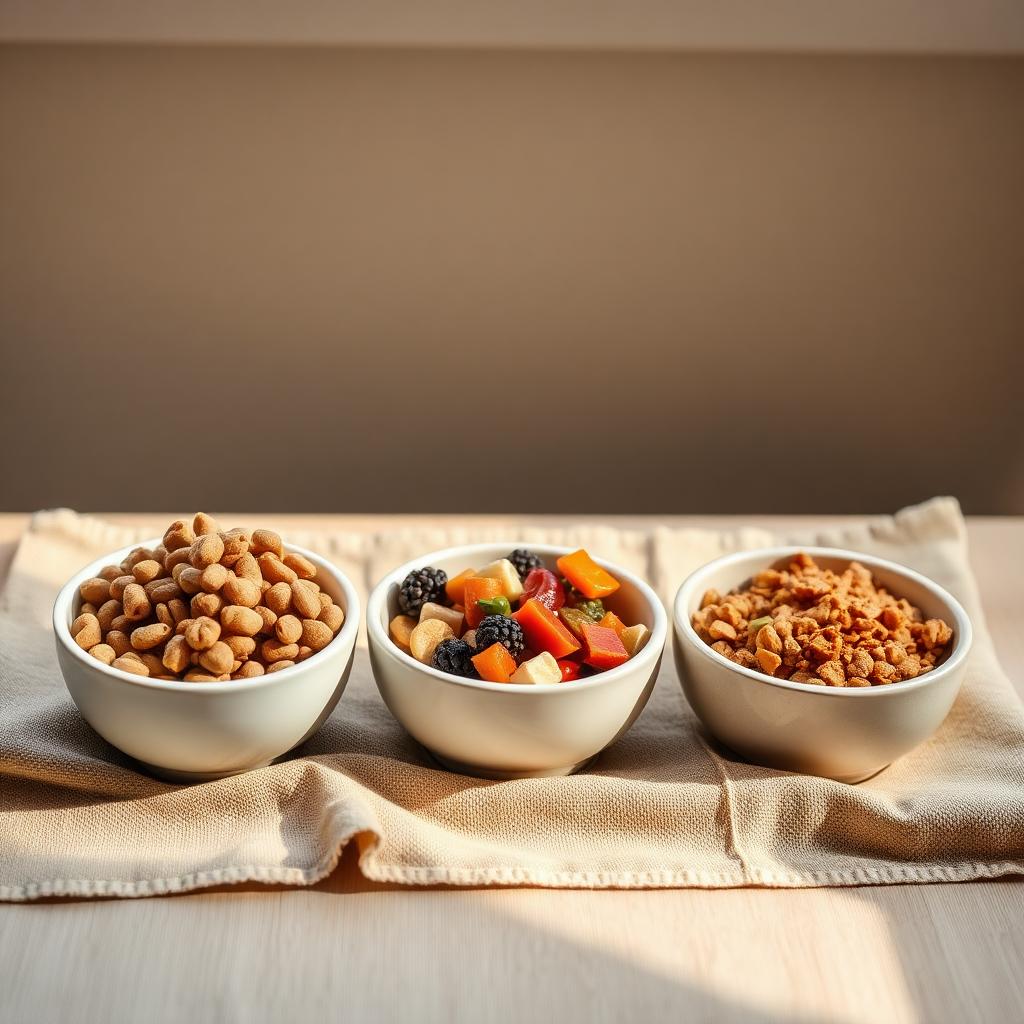
Raw vs. Kibble vs. Fresh Puppy Food: A Vet-Reviewed Comparison
How raw, kibble, and gently cooked fresh diets actually compare for puppies — safety, nutrient balance, cost, and what most veterinary boards recommend.
15 min read
Nutrition & Feeding
Puppy Hydration: How Much Water, When, and Signs of Dehydration
A vet-reviewed puppy hydration guide — daily water needs by weight, dehydration signs, water for training, and when overnight water should be pulled.
11 min read
Nutrition & Feeding
Puppy Food Allergies vs. Intolerances: How to Tell the Difference
How to tell if your puppy has a true food allergy or a food intolerance — signs, elimination diet protocol, and when to see a veterinary dermatologist.
13 min read
Continue learning
Explore the full The Complete Puppy Nutrition Guide
Vet-reviewed guide to feeding puppies from 8 weeks to adulthood: choosing food, portion sizes by breed, treats, and transitioning to adult food.